In precision machining, grinding, and milling operations, the collet remains one of the most widely used workholding solutions. Unlike chucks or vises, collets provide even radial clamping pressure around a tool or workpiece, which improves concentricity and reduces vibration. However, not all collets are designed the same. Different collet types exist to meet varying requirements for clamping range, accuracy, torque transmission, and application environment.
1. ER Collet Systems
The ER collet system is arguably the most prevalent collet type in metalworking today. ER stands for "E" (for "collet") and "R" (for "ring" - referring to the slotted design), though the exact naming origin is less important than its technical characteristics.
ER collets feature a series of longitudinal and oblique slits that allow a wide collapse range. A typical ER collet can clamp tools or workpieces within a range of 0.5 mm to 1.0 mm (depending on size), which is broader than many other collet designs. Common series include ER16, ER20, ER25, ER32, and ER40. The number indicates the collet body diameter in millimeters.
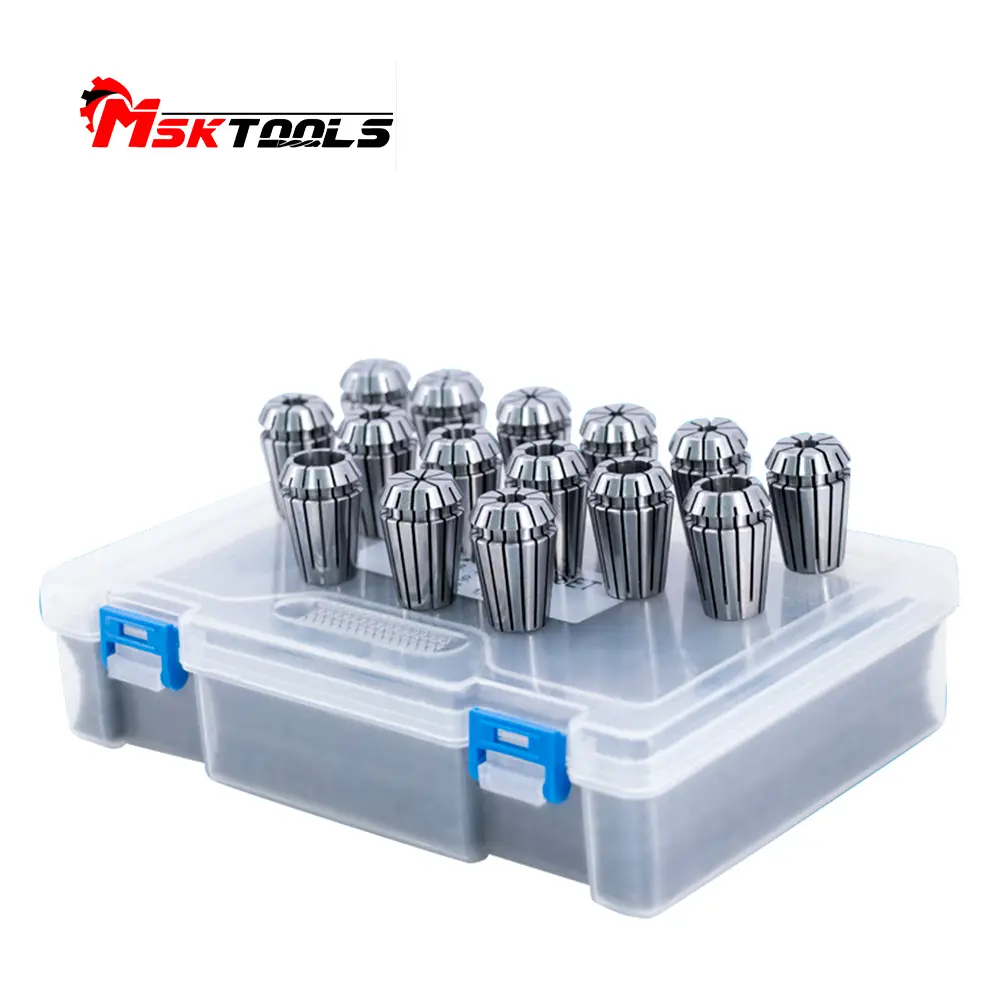
Key characteristics:
Collapse range: typically 0.5–1.0 mm per collet size
Runout accuracy: standard grade around 0.015 mm (15 µm); precision grade (ER UP) down to 0.005 mm
Torque capacity: moderate; suitable for drilling, milling, reaming, and tapping
Applications: CNC milling, drilling, tapping, grinding, and some turning operations
ER collets are compatible with a wide range of toolholders from different manufacturers, provided they meet DIN 6499 dimensions. This interchangeability has made them a default choice for general-purpose machining.
2. The SK High Speed Collet
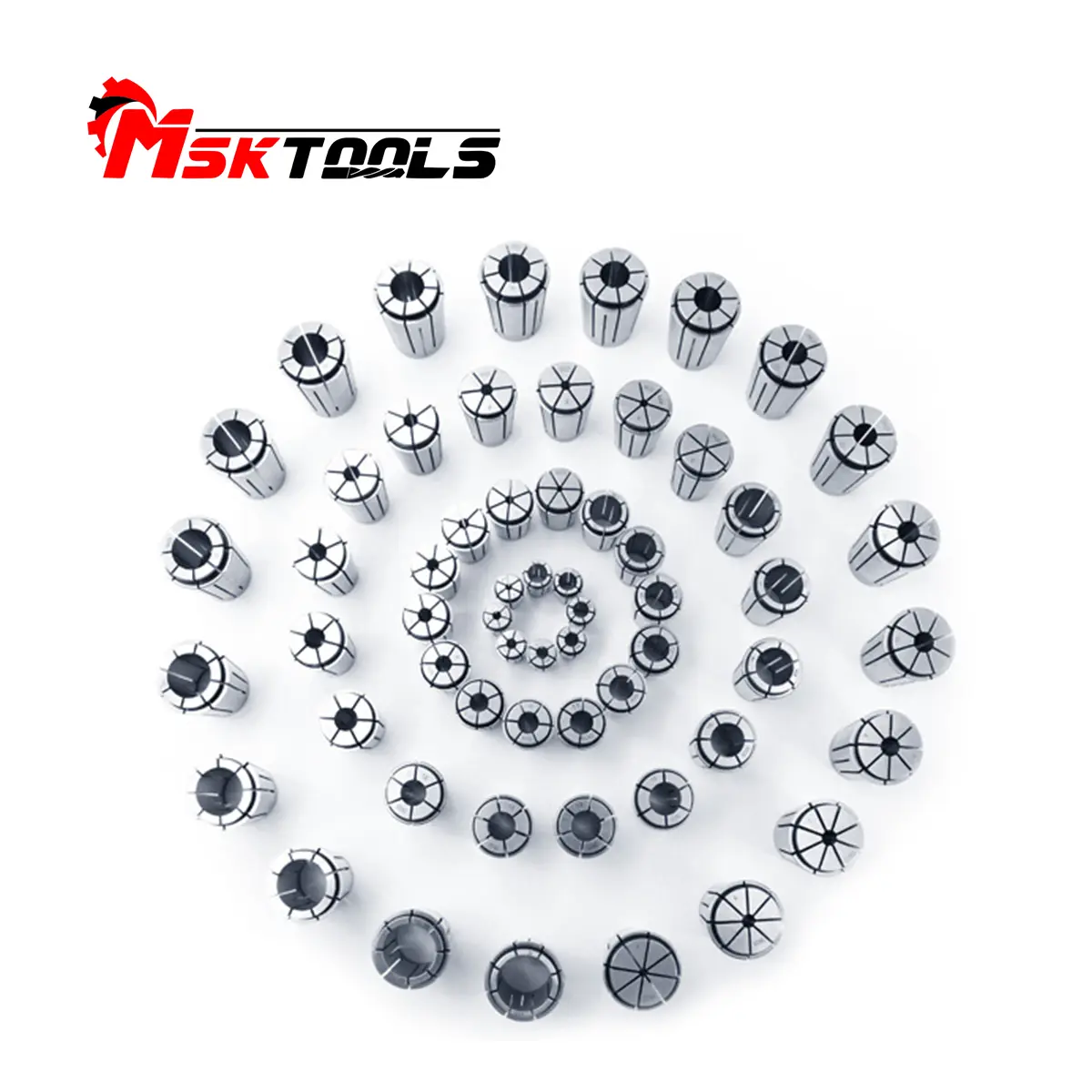
SK collet is a precision clamping system engineered for high‑spindle‑speed applications. Unlike general‑purpose collets such as ER or DA, the SK collet is designed to maintain consistent clamping force and concentricity at rotational speeds typically exceeding 20,000 rpm, where centrifugal forces can significantly reduce gripping pressure.
SK collets are commonly used in high‑speed machining (HSM) centers, CNC routers, graphite machining spindles, and high‑rpm milling operations. They are typically paired with dedicated SK collet chucks or integrated into HSK‑type toolholders. The system is widely available from European, Japanese, and North American manufacturers, with several proprietary variations existing under the same “SK” designation. Users are advised to verify compatibility between collet and holder before purchase.
Key Characteristics
Narrow clamping range
High runout accuracy
Balanced for high rotational speeds
Higher clamping force retention under centrifugal load
Limited material and size range
Not interchangeable with ER, TG, or DA
3. DA (Double-Angle) Collets
DA collets, often called "double-angle" collets, feature two tapered angles – one at the front and one at the rear. This design allows them to collapse evenly when the nut is tightened. DA collets are commonly available in three series: DA100, DA200, and DA300 (again referencing hundredths of an inch body diameters: 1.00", 2.00", 3.00").
The double-angle configuration gives DA collets a wide gripping range similar to ER collets, but with a lower torque capacity. They are frequently used in older milling machines and some drill presses, as well as in toolroom applications where quick changeovers matter.
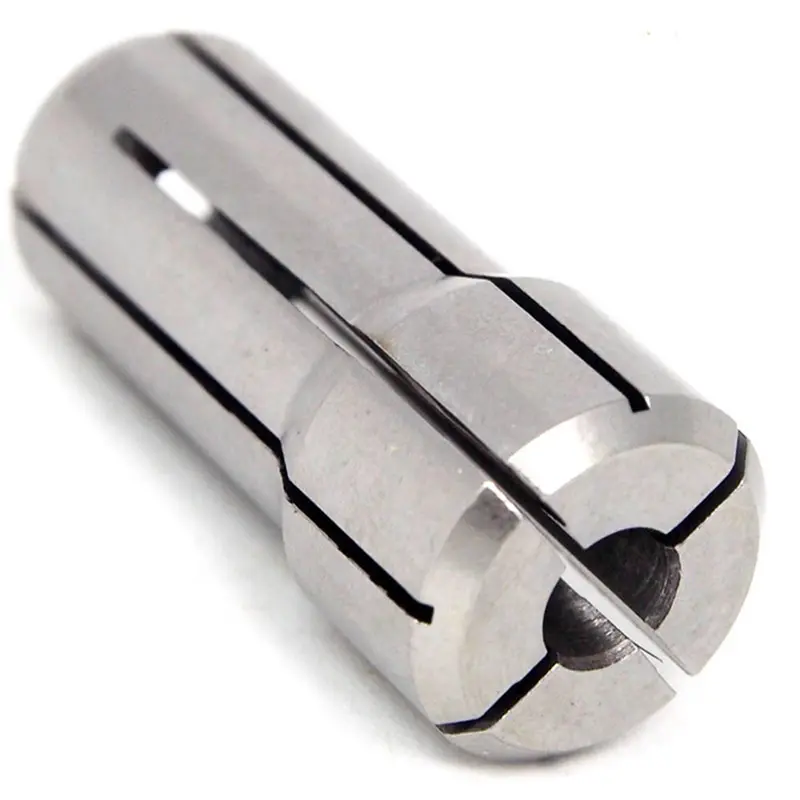
Key characteristics:
Collapse range: up to 0.8–1.0 mm (comparable to ER)
Runout accuracy: typically 0.010–0.020 mm for standard versions
Torque capacity: low to moderate – not recommended for high-torque roughing
Applications: light-duty milling, drilling, tapping, and secondary operations
One practical consideration: DA collets require specific nuts and holders, and they are not interchangeable with ER or TG systems.
4. 5C Collets
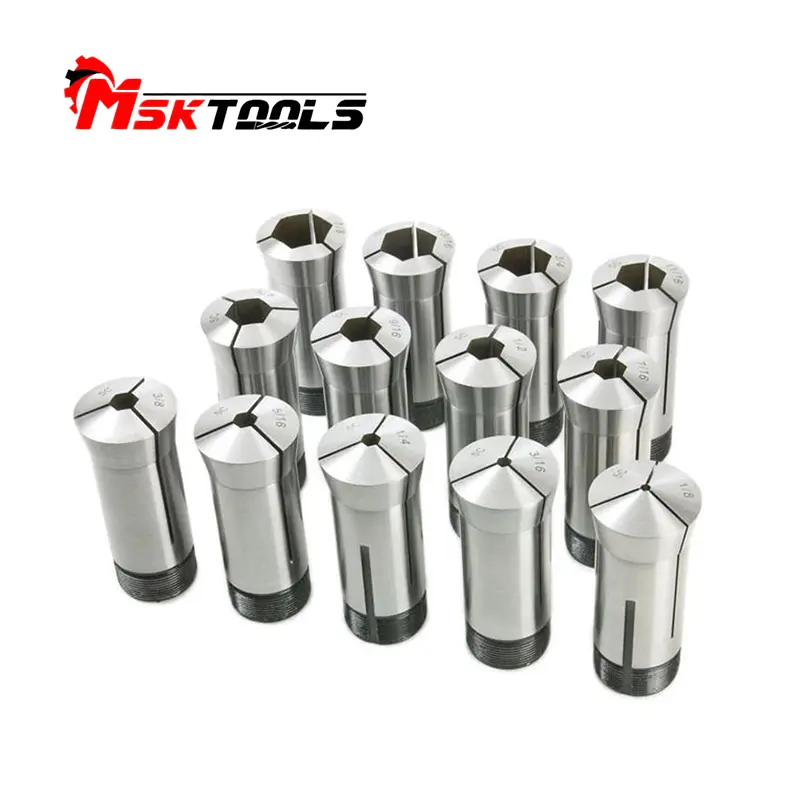
The 5C collet is a workholding standard rather than a toolholding one. The 5C collets are designed to hold workpieces in lathes, indexers, and cylindrical grinders. They are frequently used on manual lathes, CNC lathes with collet chucks, and rotary transfer machines.
The 5C designation comes from its original specification (5th generation, C style) and has been standardized by Hardinge. A 5C collet has a 1.238" thread and a body diameter of 1.250". They offer a collapse range of about 0.4–0.8 mm and are available in round, hex, and square bore shapes for gripping different workpiece profiles.
Key characteristics:
Collapse range: moderate (0.4–0.8 mm)
Runout accuracy: 0.008–0.015 mm (commercial); precision grades down to 0.003 mm
Purpose: workpiece holding, not tool holding
Applications: CNC lathes, manual lathes, indexers, grinders, and fixture work
5C collets are not suited for high-speed milling or heavy interrupted cuts, but they excel in turning and secondary finishing operations.
Selection Guidelines by Application: ER, SK, DA, and 5C Collets
When selecting between ER, SK, DA, and 5C collets, the primary distinction is between toolholding (ER, SK, DA) and workpiece holding (5C). Within toolholding, the choice depends on spindle speed, required accuracy, torque demand, and how often tool diameters change.
The table below summarizes how each collet type performs across key application parameters.
| Application Parameter | ER Collet | SK Collet | DA Collet | 5C Collet |
|---|---|---|---|---|
| Primary use | General toolholding | High‑speed toolholding (≥15k rpm) | Light‑duty toolholding | Workpiece holding (lathes, indexers) |
| Typical spindle speed | Up to 15,000 rpm (balanced up to 20k) | 20,000–40,000 rpm | Up to 8,000 rpm | N/A (workpiece rotates) |
| Runout (standard) | 0.010–0.015 mm | 0.005–0.008 mm | 0.010–0.020 mm | 0.008–0.015 mm |
| Collapse range per collet | 0.5–1.0 mm | 0.1–0.3 mm | 0.8–1.0 mm | 0.4–0.8 mm |
| Torque capacity | Moderate | Moderate | Low | Moderate |
| Interchangeability | High (DIN 6499) | Low | Low | High (5C standard) |
| Common diameters | 0.5–26 mm (ER16/25/32) | 1–16 mm (SK10/16) | Up to 25 mm (DA200/300) | Round, hex, square up to 27 mm (5C) |
| Typical operations | Milling, drilling, tapping, reaming | High‑speed finishing, micro‑machining, graphite | Light milling, drill press, secondary ops | Turning, bar work, indexing, grinding |
Selection by Application Type
General CNC milling (≤12k rpm, varied tool diameters) → ER collet. Provides the best balance of accuracy, availability, and flexibility for shops that change tools frequently.
High‑speed machining (≥18k rpm, small tools ≤6 mm) → SK collet. The narrow collapse range and balanced geometry maintain clamping force and runout control where centrifugal forces degrade ER performance.
Light‑duty milling, manual mills, or drill presses → DA collet. Acceptable for low‑torque operations, especially on older equipment already fitted with DA chucks. Not recommended for new CNC purchases.
Lathe workholding (turning, bar feeding, secondary operations) → 5C collet. The industry standard for gripping round, hex, or square workpieces up to 27 mm. For larger diameters (up to 41 mm), consider 16C collets.
When Selecting, Consider the Following Sequence
Follow these four steps to avoid mismatches and unnecessary inventory:
1. Identify holding mode: tool or workpiece?
If holding a cutting tool (end mill, drill, reamer) → ER, SK, or DA.
If holding a workpiece (bar, casting, finished part) → 5C (or 16C/3C for other capacities).
2. Determine spindle speed and required runout
Speeds >15,000 rpm and runout requirement <0.008 mm → SK collet.
Speeds <15,000 rpm and runout requirement 0.010–0.015 mm → ER collet.
Low speed (<8,000 rpm) and runout up to 0.020 mm acceptable → DA collet.
3. Evaluate tool diameter variation
Frequent changes between metric and imperial shanks (e.g., 6 mm, 1/4”, 6.35 mm) → ER or DA (wide collapse range).
Fixed diameters, high repeatability needed → SK collet (order exact sizes).
Lathe work with stock that varies by 0.5–0.8 mm → one 5C collet per diameter.
4. Check existing holders and budget
If the spindle already has an ER collet chuck, switching to SK or DA requires a new holder, nut, and wrenches – often not cost‑effective.
5C collets require a 5C collet chuck or draw tube. Many lathes come with 5C ready; otherwise, an adapter is needed.
Summary
For most machine shops, stocking ER collets (ER16, ER25, ER32) for toolholding and 5C collets for workpiece holding covers 80% of daily work. Add SK collets only if you regularly run spindles above 15,000 rpm and require runout below 0.008 mm. DA collets are best kept for maintaining older equipment rather than new investments.
Always verify the collet’s compatibility with your holder or chuck using the manufacturer’s dimensional data – especially for SK and DA, where non‑standard variations exist. Following the selection sequence, maintaining clean tapers, and respecting collapse ranges will maximize accuracy and service life across all collet types.
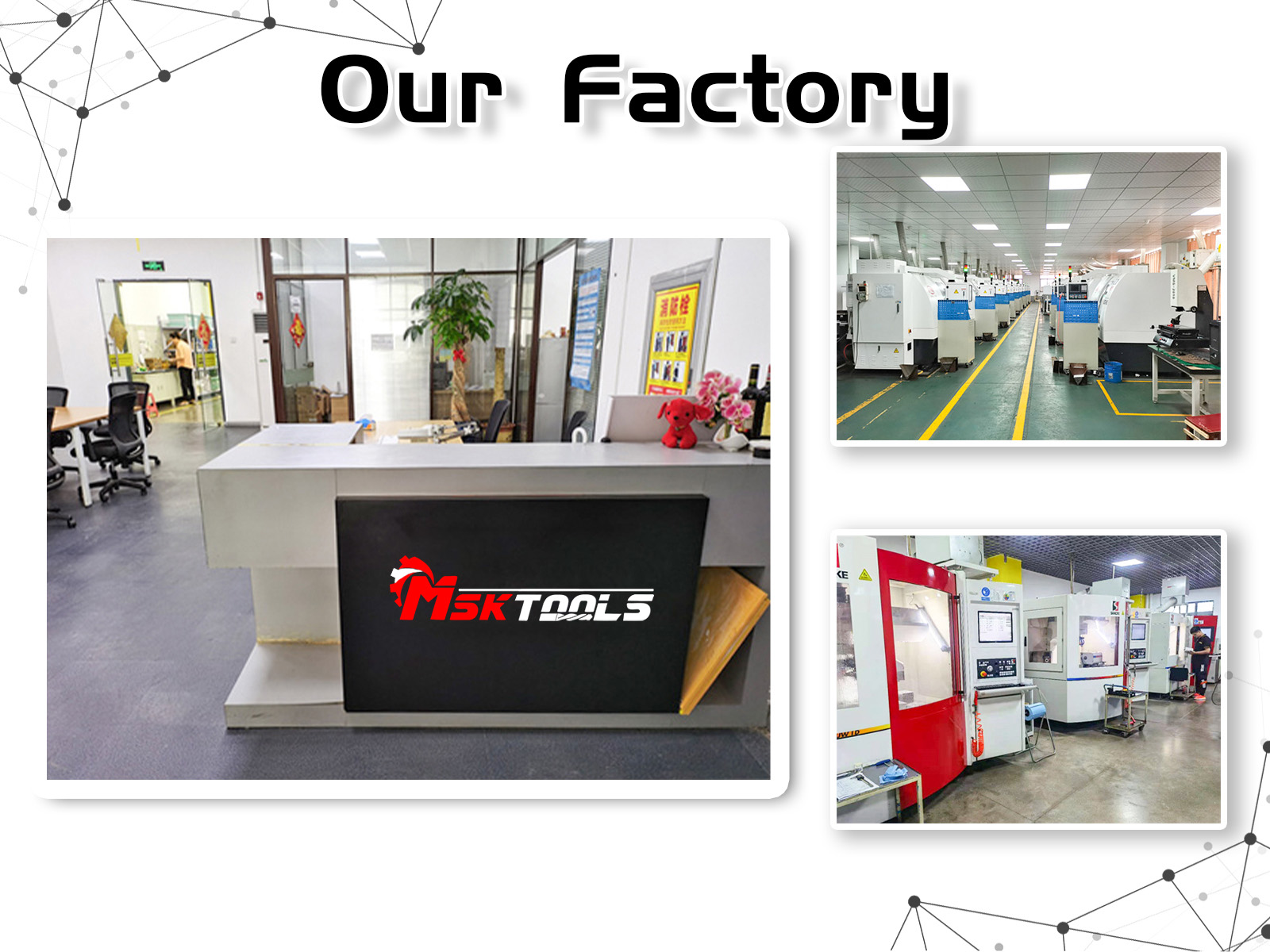
About MSK CNC Tools
MSK (Tianjin) International Trading Co., Ltd. was founded in 2015 and has experienced steady growth ever since. In 2016, the company passed the Rheinland ISO 9001 certification, demonstrating our commitment to quality management.
We possess internationally advanced manufacturing equipment, including:
German SACCKE high-end five-axis grinding center
German ZOLLER six-axis tool testing center
Taiwan PALMARY machine tools
We are dedicated to producing high-end, professional, and efficient CNC tools. As a one-stop service provider, we stock a comprehensive range of products:
Milling cutters, taps, drills, blades
Collets, tool holders, dies, machine tools
And other tooling supplies
Our highly professional staff help you quickly find the products you need. We also offer customization services – simply tell us the quantity and product parameters, and we take care of the rest. It’s that simple.
Hot selling products
Post time: Jun-12-2026


