Let’s be honest—workholding doesn’t get the attention it deserves. Most of us spend hours tweaking feeds and speeds, but if that vise isn’t locking down the part properly, nothing else matters. And if you’ve ever dealt with a hydraulic vise that decided to take a day off because of a tiny seal failure, you know exactly what I mean.
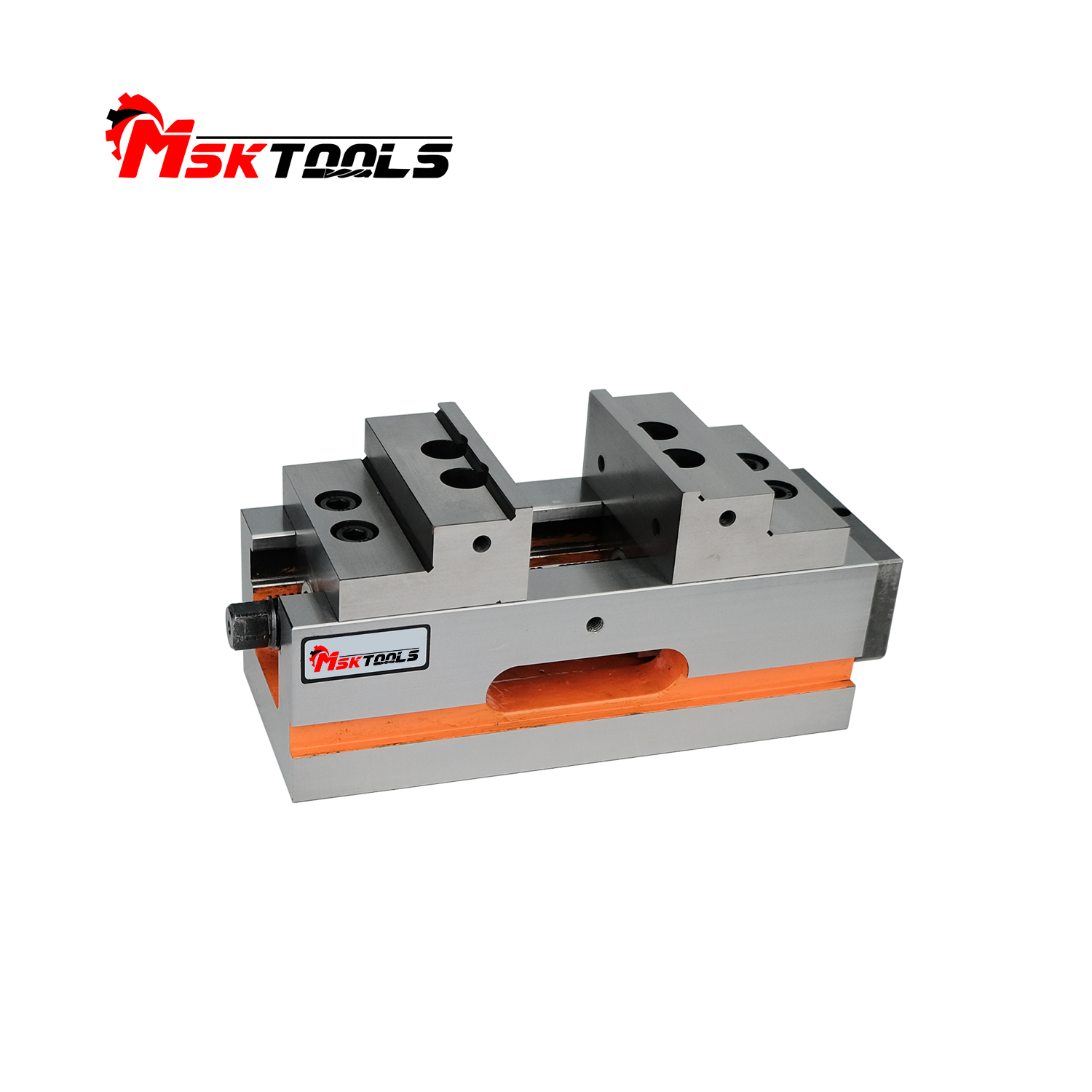
That’s why when we tested the WB MC series from MSK, the first thing that caught our eye wasn’t the shiny ground surface—it’s the mechanical angle-fixed clamping system. No pumps, no hoses, no thermal drift that messes with your pressure mid-cycle. Just a solid, repeatable mechanical grip that does exactly what it says on the tin.
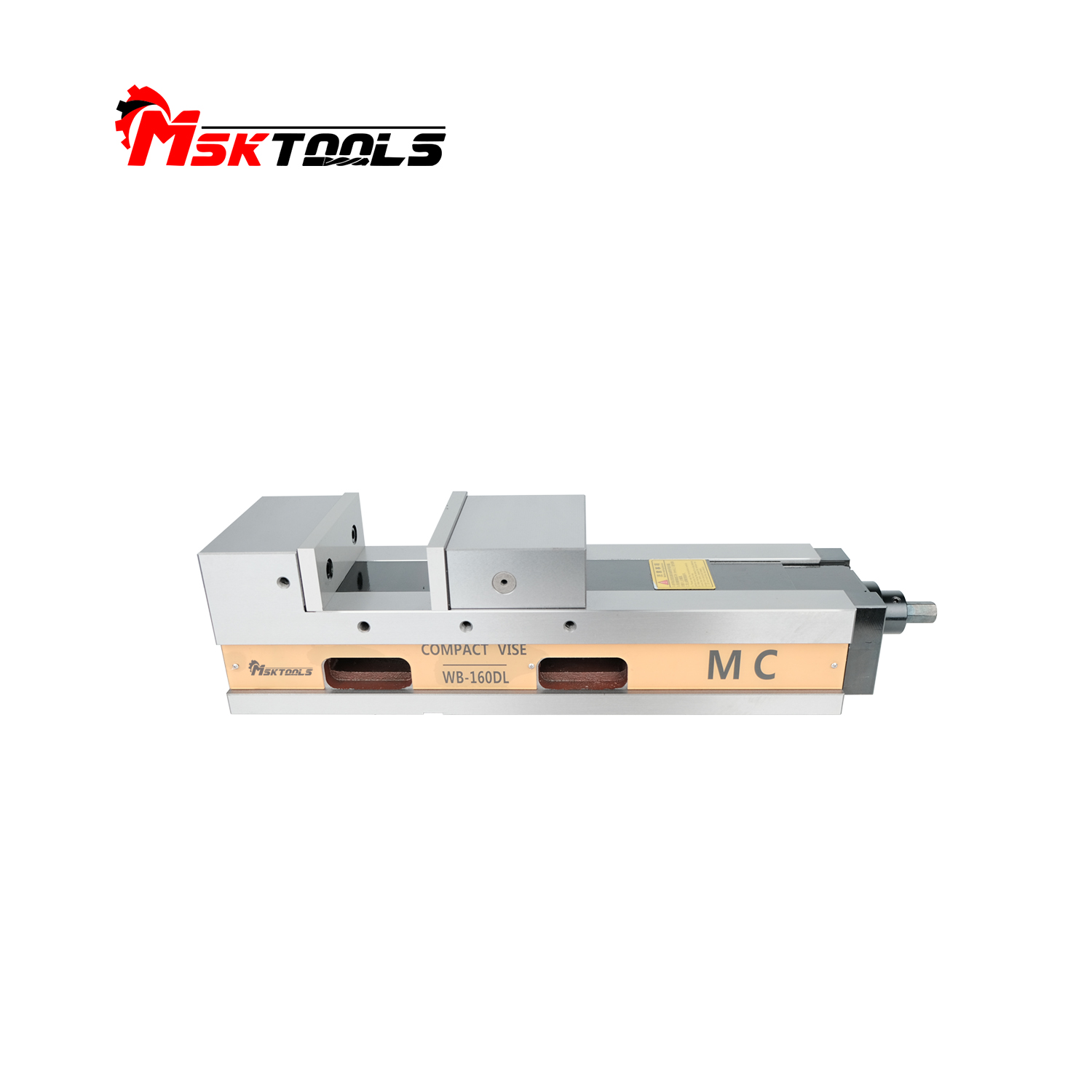
What makes the “angle-fixed” thing so special?
If you’ve been around machining for a while, you’ve seen jaw lift. That annoying tendency where the movable jaw tilts upward as you clamp, ruining your squareness and forcing you to indicate every single setup. The WB’s design locks that jaw movement to a fixed angle path, so the clamping force pulls down as well as forward. Result? The workpiece stays flat against the base, and you don’t have to keep reaching for the dead blow hammer.
In our shop, we ran a batch of 4140 steel blocks on a Haas VF-2, roughing with a 1/2" end mill at 8,000 RPM and 50 IPM feed. We measured the Z-height variation across ten parts—all within 0.005mm. That’s not just marketing talk; that’s real-world repeatability.
Why we’re leaning away from hydraulics
Don’t get me wrong—hydraulic vises have their place. If you’re running a 24/7 lights-out cell with the same part for months, fine. But for the other 90% of job shops? The mechanical approach saves you from:
- Checking oil levels every morning
- Replacing seals every few thousand cycles
- Explaining to the boss why the clamp force dropped 30% because the shop temperature went up 5°C
The WB Preicision Machine Vise doesn't care about any of that. It’s rugged, simple, and about as maintenance-free as a vise can get. The hardened steel body is stress-relieved and ground flat on all critical surfaces—you can mount it on a sine plate for angle work, flip it for vertical clamping, or just bolt it straight to your table and start cutting.
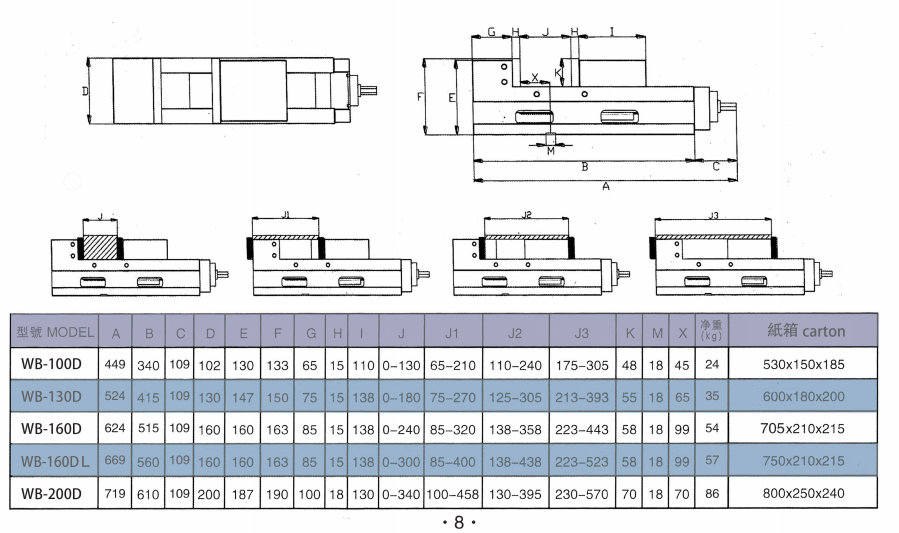
A couple of things we noticed during setup
First, the low-profile design gives you extra clearance—we could run a shorter tool holder and actually improved our surface finish on a deep cavity job because we didn't have to extend the tool as far. Second, the jaw plates are interchangeable, so you can swap in soft jaws for delicate parts or hardened ones for production runs. It’s not flashy, but it’s the kind of flexibility that saves you from ordering a different vise for every new job.
Who should actually buy this?
If you do tool and die work, mold bases, or any precision grinding where parallelism is critical—this vise is worth a look. If you're tired of tweaking your hydraulic regulator every time the coolant warms up—definitely worth a look. And if you're just starting to build your workholding inventory and want something that won't break the bank or your sanity—put this on your shortlist.
MSK has been making these for the Chinese domestic market for years, and they've finally pushed them out globally. The fit and finish is on par with much pricier European brands, but the price tag is, let’s say, a lot friendlier.

One last thought
No vise is perfect for every situation. But the WB MC series solves the most common headaches we see in daily machining—inconsistent clamping, jaw lift, and hydraulic hassles—without overcomplicating things. Sometimes the best solution is the simplest one.
If you want the full specs or need help deciding which jaw set to order, check the product page here: Mechanical angle-fixed precision vise
Hot selling products
Post time: Jun-30-2026


