Introduction: The Hidden Cost of Dull Drill Bits
Every workshop manager knows the frustration. A drill bit that once cut through steel like butter now struggles, squeals, and burns its way through workpieces. Productivity drops, material waste increases, and your skilled operators spend more time fighting tools than making parts.
The solution isn't buying new bits every week—it's investing in a professional drill bit sharpening machine that restores worn tools to like-new condition.
In this guide, we'll explore why precision grinding is non-negotiable for modern manufacturing, how to choose the right equipment, and the measurable ROI that comes with in-house sharpening capabilities.
Why Grinding Machines Are the Backbone of Tool Maintenance
A grinding machine designed for drill bits does more than just put an edge on steel. It recreates the complex geometry that makes a drill bit perform—the point angle, the relief angles, and the cutting lip symmetry.
When you sharpen a drill bit correctly:
Cutting efficiency improves by 30-50% compared to dull tools
Hole quality becomes consistent and burr-free
Tool life extends through multiple re-sharpening cycles
Machine spindle loads decrease, protecting your equipment
Without proper sharpening equipment, operators often attempt hand grinding on bench grinders. The result? Uneven lips, incorrect angles, and bits that actually perform worse than before they were "sharpened."
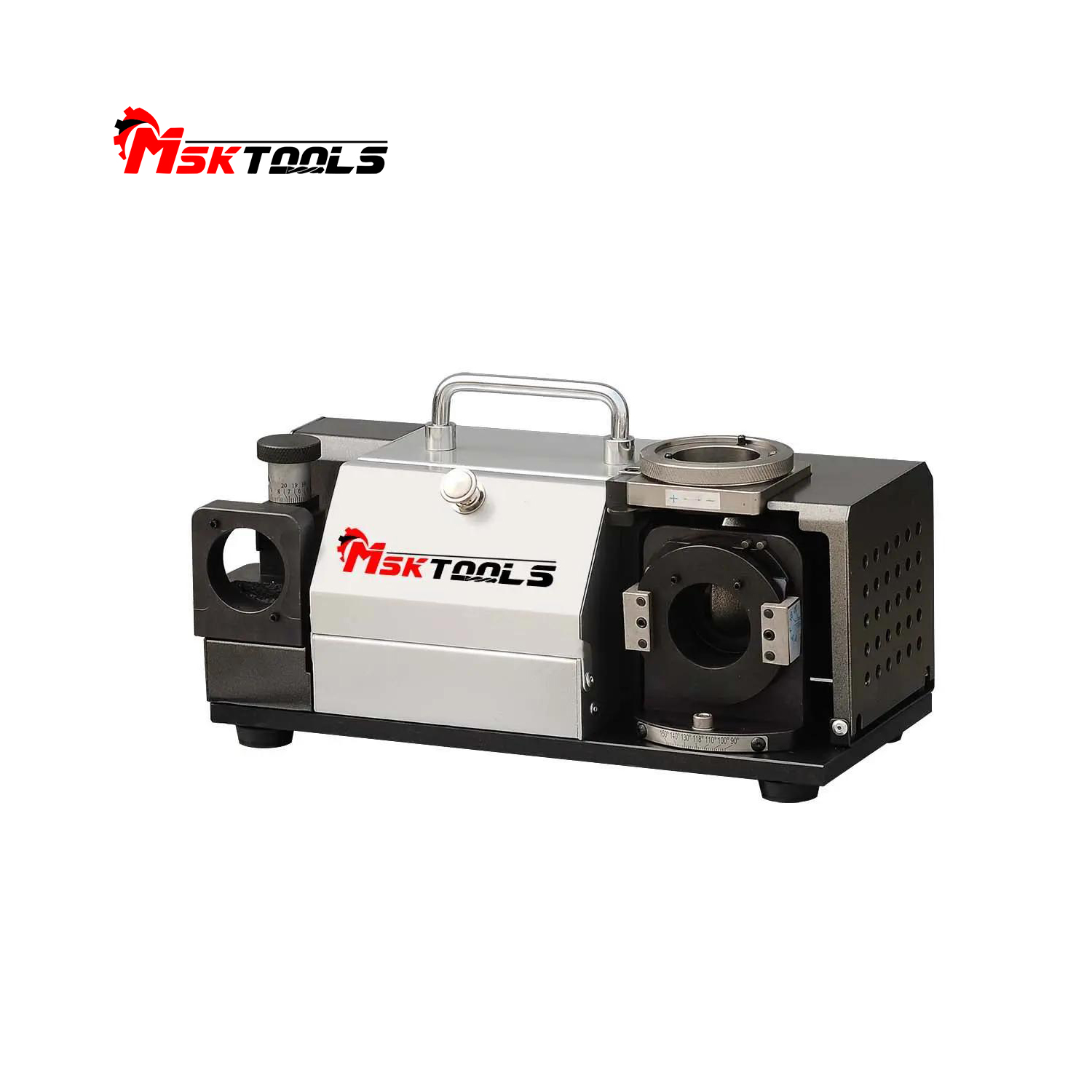
What to Look for in a Drill Bit Sharpening Machine
1. Grinding Wheel Quality
The heart of any drill bit sharpening machine is its grinding wheel. Look for CBN (cubic boron nitride) or diamond wheels that maintain their shape and cutting ability over thousands of cycles.
2. Angle Adjustment Range
Different materials require different point angles:
Standard 118° for general purpose drilling
135° for harder materials like stainless steel
Specialty angles for plastics or composites
Your machine should offer quick, repeatable angle changes.
3. Chuck Precision
A grinding machine is only as accurate as its workholding. High-precision collets or chucks that grip the bit shank without runout are essential for producing symmetrical cutting edges.
4. Coolant System
Overheating destroys the temper of high-speed steel and carbide. Look for machines with integrated coolant delivery or at least mist lubrication to keep temperatures down.
5. Ease of Use
The best tool grinding equipment in the world is useless if it requires a PhD to operate. User-friendly machines with intuitive controls and clear gauges allow any trained operator to produce consistent results.
MSK CNC Tools: Professional Grinding Solutions
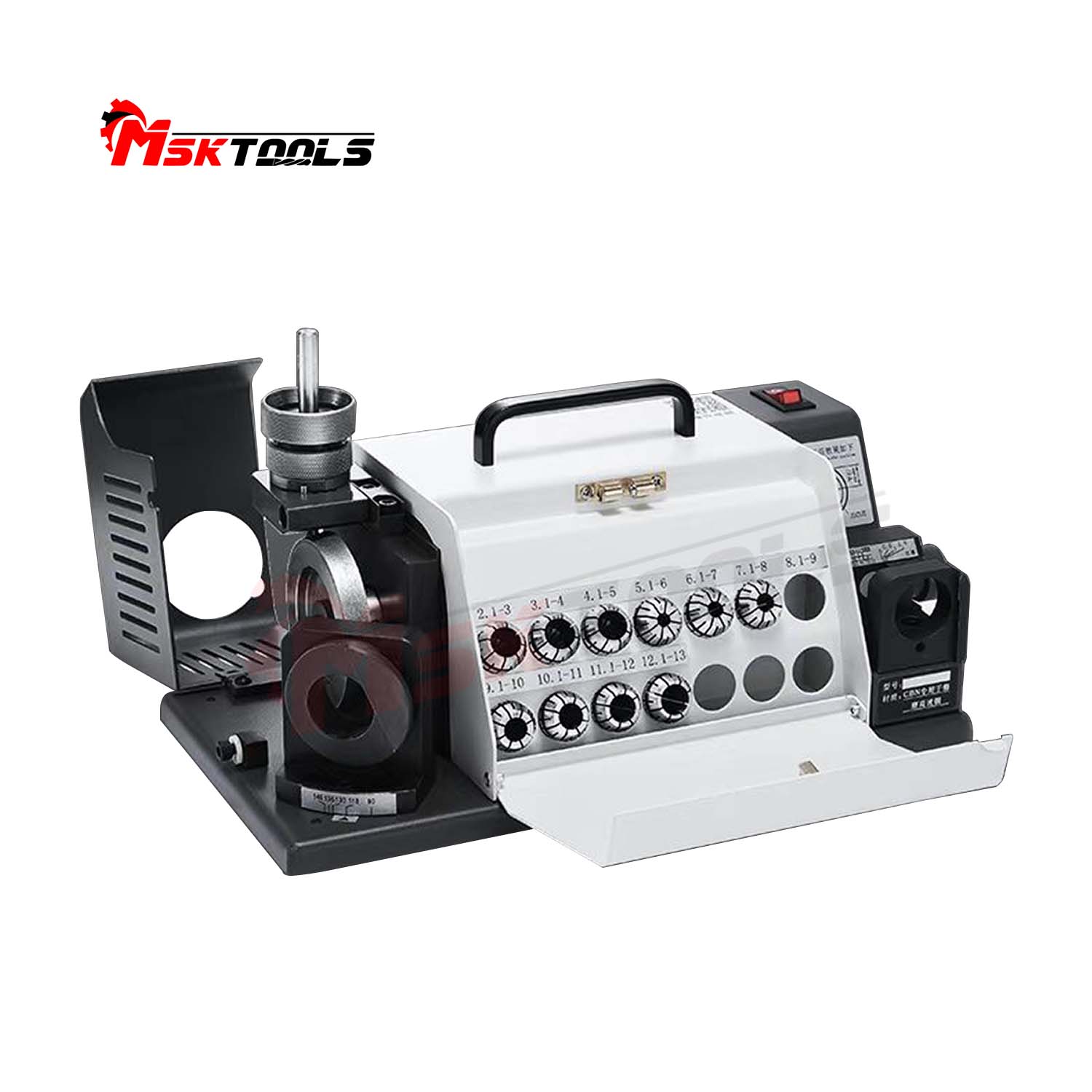
For workshops ready to take control of their tool maintenance, MSK CNC Tools offers professional drill bit re-sharpening machines designed for industrial use.
These precision grinding systems are built to handle:
- High-speed steel and carbide drill bits
- Sizes ranging from small micro-drills to large taper-shank bits
- Production-level throughput with consistent quality
The machines feature rigid cast-iron construction to dampen vibration, precision-ground spindles for smooth operation, and adjustable stops for rapid setup. Whether you're a job shop, a maintenance department, or a high-volume manufacturer, having a dedicated grinding machine on the floor transforms how you manage tooling.
Common Mistakes to Avoid When Sharpening Drill Bits
Even with a high-quality drill bit sharpening machine, operators can make errors that compromise results:
Mistake 1: Overheating the Bit
Aggressive grinding without proper cooling causes the cutting edge to lose hardness. Take light passes and use coolant.
Mistake 2: Ignoring Symmetry
If one lip is longer than the other, the bit will cut oversize holes and wear unevenly. Use a center gauge or optical comparator to verify lip length.
Mistake 3: Incorrect Relief Angles
Too much relief weakens the cutting edge; too little causes excessive friction. Follow manufacturer recommendations for the material you're drilling.
Mistake 4: Skipping Wheel Dressing
A loaded or out-of-round grinding wheel produces poor finishes. Dress your wheel regularly to expose fresh abrasive.
Maintenance Tips for Your Grinding Machine
To keep your drill bit sharpening machine performing at its peak:
Clean regularly – Grinding dust is abrasive and can damage ways and bearings.
Check wheel balance – Out-of-balance wheels cause vibration and poor finishes.
Lubricate moving parts – Follow the manufacturer's schedule.
Replace coolant fluid – Stale coolant breeds bacteria and reduces cooling effectiveness.
Calibrate angle settings – Use test pieces to verify accuracy.
Conclusion: Sharp Tools, Sharp Business
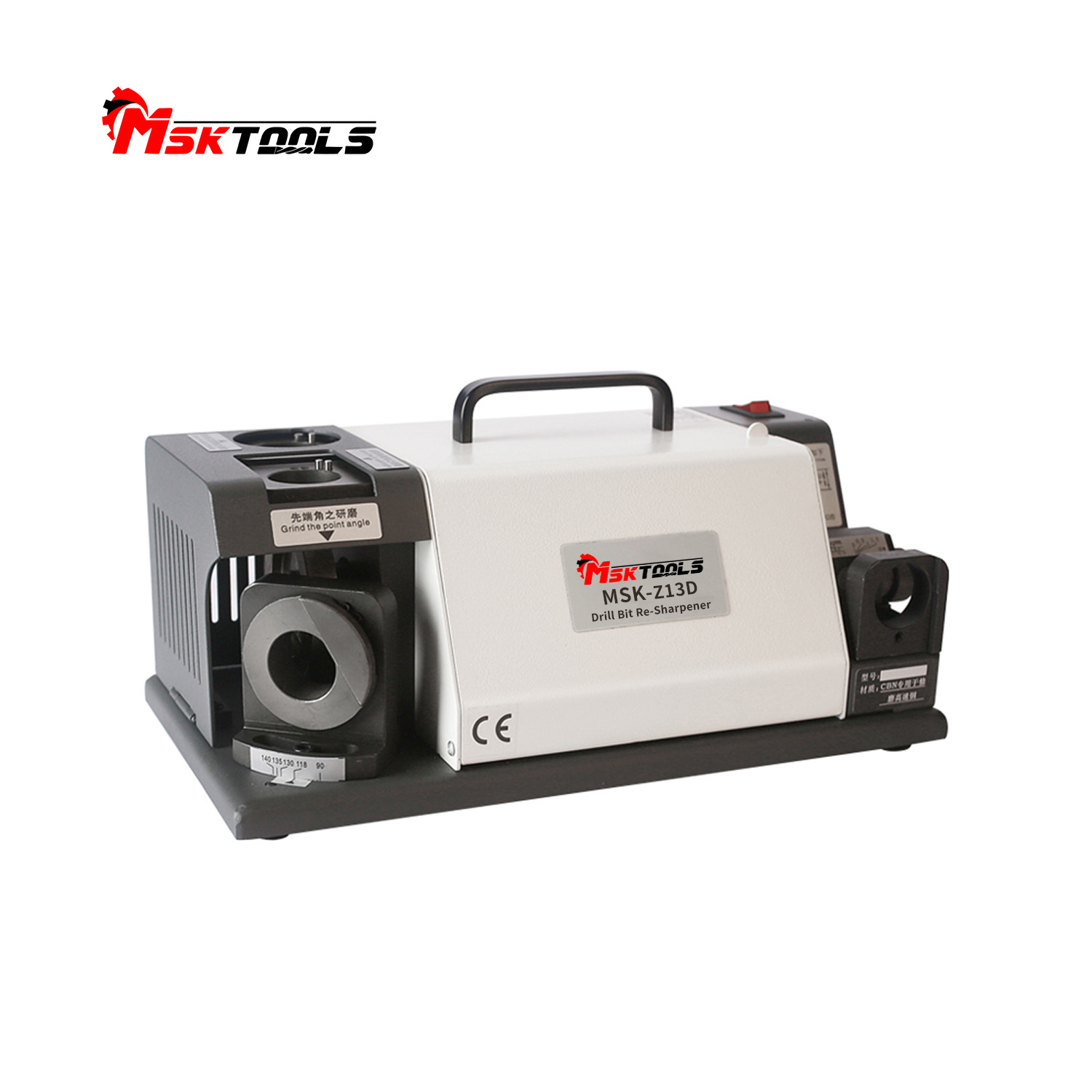
A professional grinding machine is not an expense—it's an investment that pays dividends in productivity, quality, and cost control. Every workshop that drills holes has a need for reliable drill bit sharpening, and the economics make in-house sharpening the obvious choice.
If you're ready to stop throwing money away on dull bits and external sharpening services, explore the comprehensive range of professional drill bit re-sharpening machines from MSK CNC Tools. With the right equipment, you'll turn your tool crib from a cost center into a productivity driver.
What's your biggest challenge with drill bit maintenance? Share your experience in the comments below—or contact the MSK CNC team to discuss which grinding solution fits your operation.
Contact MSK (Tianjin) Cutting Technology Co.,LTD
- Email: molly@mskcnctools.com
- Phone: 0086-13602071763
Upgrade your machining process today and experience the difference of friction drilling technology.
Hot selling products
Post time: Jul-28-2026


