If you’ve ever stood in front of a lathe tailstock or a milling machine spindle wondering why that shiny new drill bit won’t fit, you’ve already met the Morse taper—probably without recognizing it by name. The Morse taper system, invented in the 1860s, remains the global standard for holding tooling in machine spindles. Yet the subtle differences between MT1, MT2, and MT3—and the reducing sleeves that bridge them—trip up even seasoned machinists.
This guide cuts through the confusion. We’ll walk through the actual dimensions you’ll see on the shop floor, real‑world applications, and the practical decision‑making process for choosing a reducing sleeve—using real product specs (not textbook approximations). So you can stop guessing and start cutting.
What the Numbers Actually Mean
The numbers in MT1, MT2, and MT3 refer to the taper series—a fixed taper angle (about 1.5 inches of diameter drop per foot) shared across all sizes. However, the physical dimensions of a reducing sleeve (the adapter you hold in your hand) are what matter when matching your spindle to your tool.
Below are the exact specifications for the most common Morse taper reducing sleeves, taken directly from production drawings:
| Sleeve Model | Full Length (mm) | Outer Cone Diameter D (mm) | Inner Cone Diameter d (mm) | What It Does |
|---|---|---|---|---|
| MT2‑1 | 92 | 17.78 | 12.065 | Fits an MT1 tool into an MT2 spindle |
| MT3‑1 | 99 | 23.825 | 12.065 | Fits an MT1 tool into an MT3 spindle |
| MT3‑2 | 112 | 23.825 | 17.78 | Fits an MT2 tool into an MT3 spindle – the most popular choice |
Key takeaway: The Outer Cone Diameter (D) must match your machine’s spindle bore. The Inner Cone Diameter (d) must match your tool’s shank. The length varies to ensure proper seating and drawbar engagement.
For reference, these outer diameters correspond exactly to the standard large‑end diameters of MT2 (17.78 mm) and MT3 (23.825 mm), while the inner diameters match MT1 (12.065 mm) and MT2 (17.78 mm) shanks. This ensures interchangeability with virtually all branded tooling.
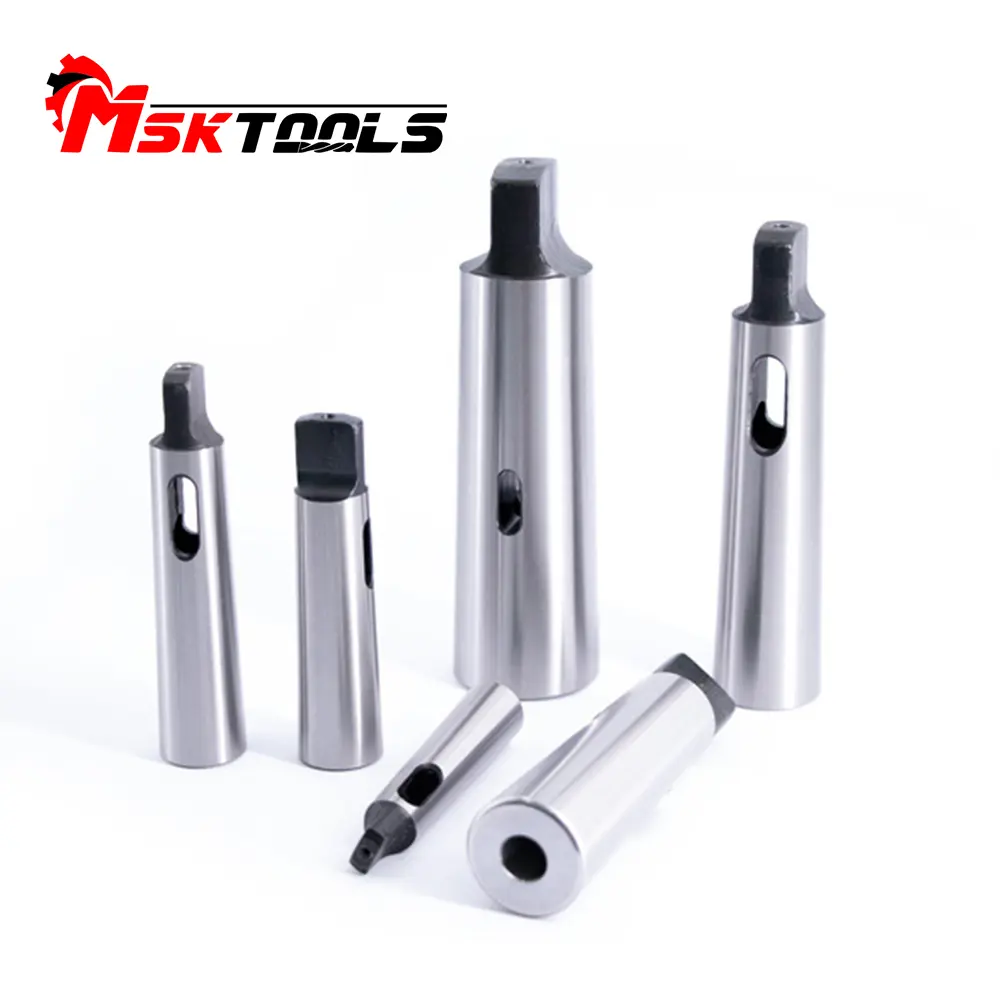
MT1 – The Light-Duty Performer (Through a Sleeve)
The MT1 taper is the smallest common size you’ll see in professional shops. It’s primarily found on:
- Bench‑top drill presses (light‑duty)
- Small lathe tailstocks (e.g., 7” x 10” mini lathes)
- Die grinders and some hobbyist milling attachments
Because of its compact size, MT1 tooling is typically limited to drilling up to 1/2” diameter in mild steel or light reaming operations. The torque capacity is modest—push it too hard, and you risk either spindle damage or the tool spinning in the taper.
When to choose MT1: You have a small hobby machine, or you’re holding tiny tools (under 1/4” shank) where a larger taper would be overkill. In most industrial settings, MT1 is increasingly rare; MT2 has largely taken over as the entry‑level standard.
MT2 – The Workshop Workhorse
Step up to MT2, and you enter the most common taper in the world. Walk into any job shop or maintenance department, and you’ll find MT2 in:
- Lathe tailstocks on standard 12”–14” swing lathes
- Drill presses from 15” to 18” models
- Milling machine arbor supports and some horizontal mills
- Rotary tables and dividing heads
MT2 tooling supports drilling up to about 3/4” diameter in steel and moderate milling with end mill holders. The larger contact surface provides better grip and rigidity than MT1, making it suitable for daily production work.
A key advantage: MT2 is the most cost‑effective size for replacement tooling. You’ll find the widest selection of drills, reamers, countersinks, and holders in this taper.
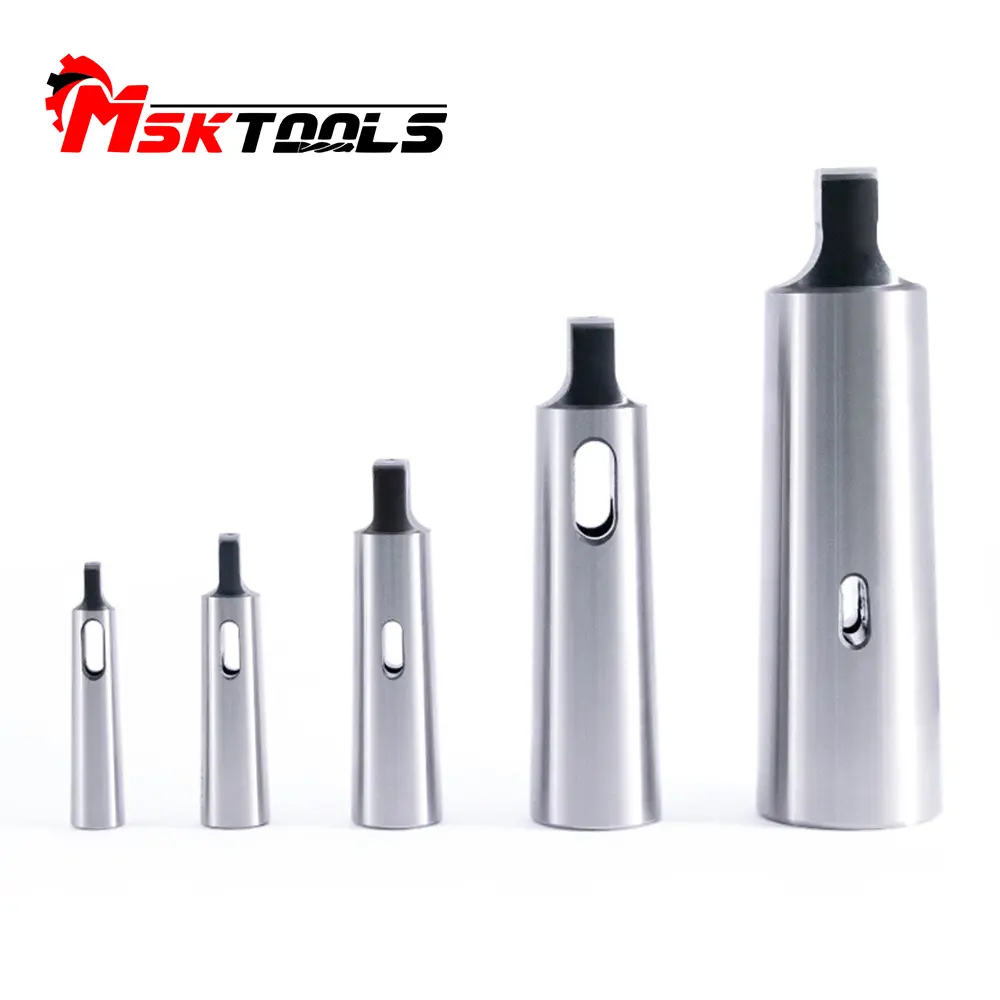
MT3 – The Heavy‑Duty Standard
MT3 is the go‑to for larger machines where power and stiffness are non‑negotiable. Typical applications:
- Milling machine spindles (vertical and horizontal) – The spindle sleeve of the milling machine is made of MT3 material.
- Larger engine lathes (15” swing and above) tailstocks
- Radial arm drill presses
- CNC lathe live toolholders (in some older models)
With an MT3 spindle, you can comfortably drill over 1” diameter in steel, drive large face mills, and handle aggressive feeds. The increased surface area transmits torque more efficiently and reduces vibration, which translates to better surface finish and longer tool life.
The catch: MT3 tooling is heavier and more expensive. For shops with multiple machine sizes, maintaining separate MT2 and MT3 tool inventories can get costly—which is exactly why reducing sleeves exist.
Reducing Sleeves: The Bridge Between Tapers
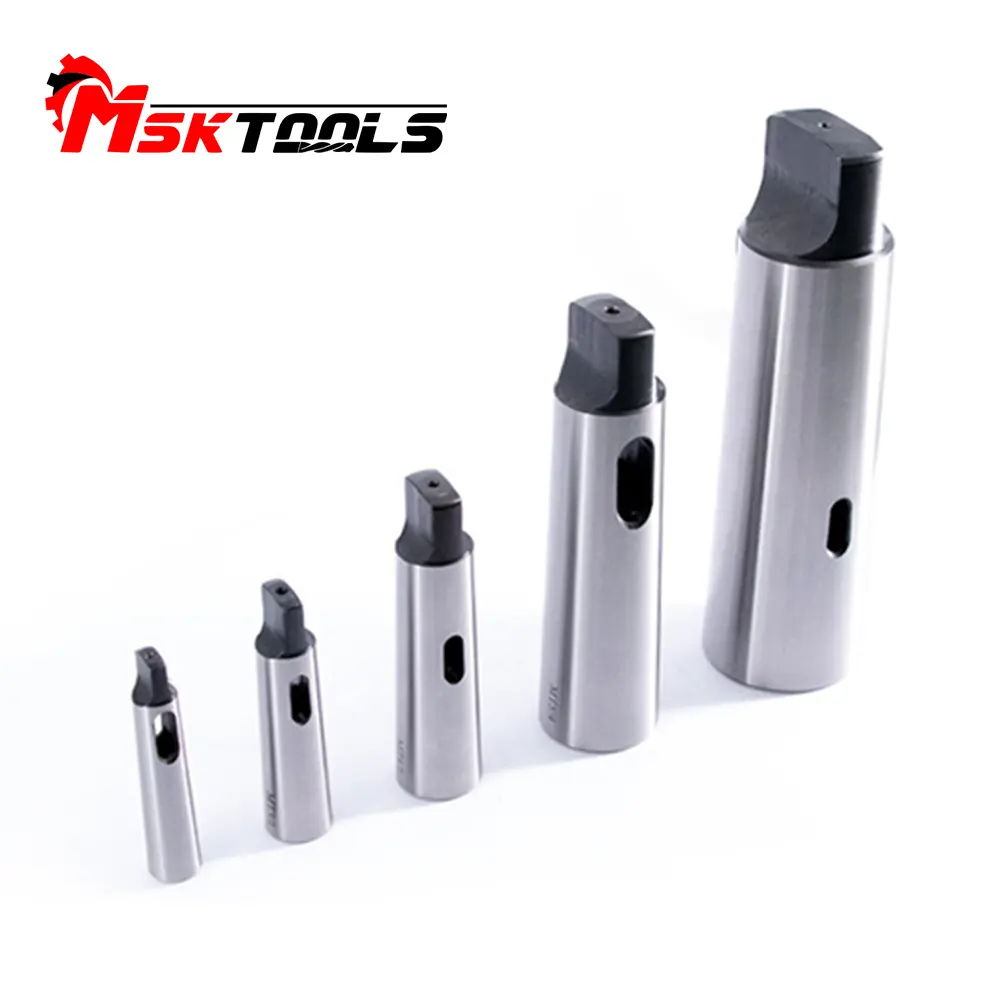
A reducing sleeve (or adapter) is a precision‑ground cylinder with an external taper that matches your machine’s spindle (e.g., MT3) and an internal taper that matches your tool’s shank (e.g., MT2). Slide the tool into the sleeve, then insert the assembly into the spindle—and you’re ready to run.
Common combinations you’ll see in the market, including our own range (with actual measured dimensions from the table above):
- MT2‑1 – Adapts an MT1 tool into an MT2 spindle. Length 92 mm, outer Ø 17.78 mm, inner Ø 12.065 mm.
- MT3‑1 – Adapts an MT1 tool into an MT3 spindle. Length 99 mm, outer Ø 23.825 mm, inner Ø 12.065 mm. (Less common, but useful for legacy tooling.)
- MT3‑2 – Adapts an MT2 tool into an MT3 spindle. Length 112 mm, outer Ø 23.825 mm, inner Ø 17.78 mm – the most frequently used size in production shops.
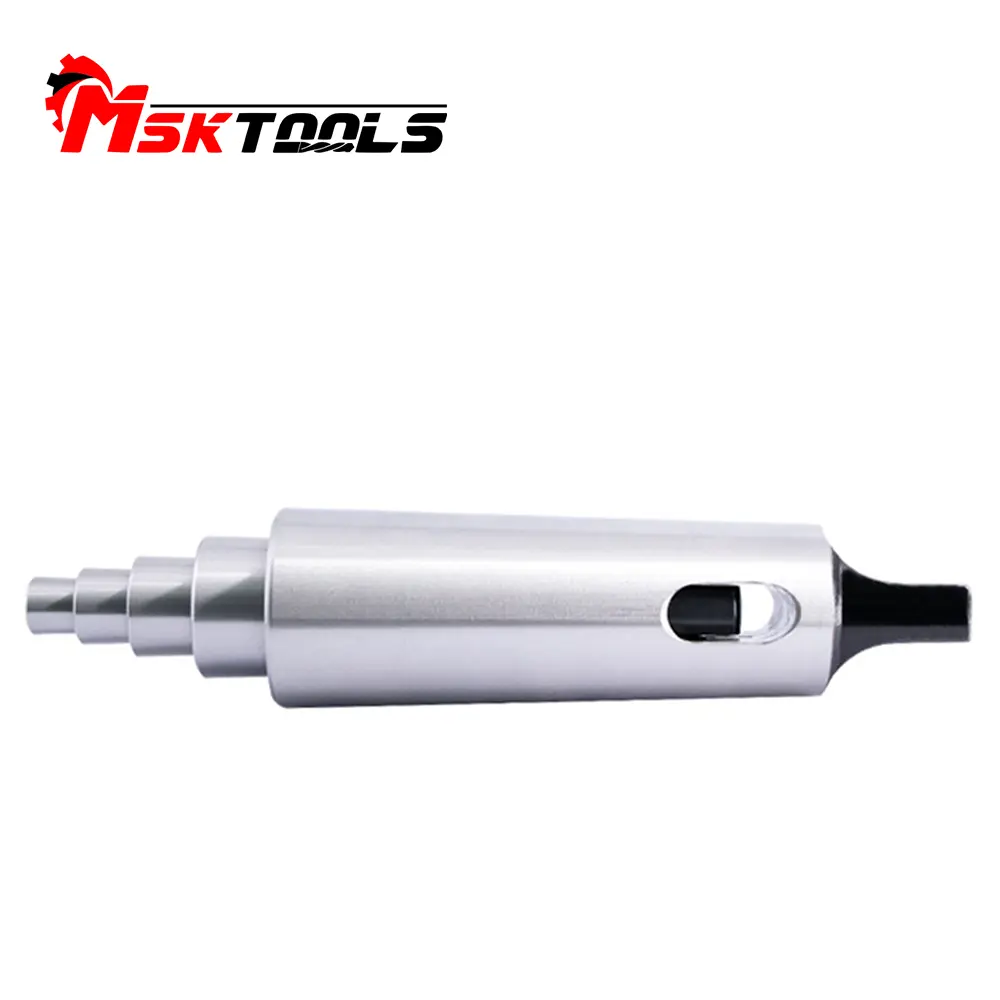
How to Choose the Right Reducing Sleeve (Step‑by‑Step)
Here’s the practical decision process we walk every customer through:
Step 1: Identify your machine’s spindle taper.
Check the machine manual or measure the outer cone diameter of your spindle bore (the large end). Match it to the D column in the table. For example, if your spindle bore measures 23.825 mm, you need an MT3 outer taper.
Step 2: Identify your tool’s shank taper.
Look at the tool shank—most are stamped with “MT2” or “MT3”. If not, measure the shank’s large diameter. Match it to the d column in the table. For instance, a tool with a 17.78 mm shank is MT2.
Step 3: Select the sleeve that combines your spindle size (outer) and tool size (inner).
So:
- Spindle MT3 (D=23.825) + Tool MT2 (d=17.78) → MT3‑2 sleeve
- Spindle MT2 (D=17.78) + Tool MT1 (d=12.065) → MT2‑1 sleeve
- Spindle MT3 (D=23.825) + Tool MT1 (d=12.065) → MT3‑1 sleeve
Step 4: Check drawbar compatibility.
Does your machine use a drawbar (threaded rod) to pull the taper tight? If yes, ensure the sleeve has a through‑hole and the internal threads (if any) match your drawbar. Many sleeves (including our standard models) are designed with a plain through‑hole, relying on the taper’s self‑locking action—but a drawbar adds security for heavy milling. The overall length (L) matters here: too short, and the drawbar won’t engage; too long, and it may bottom out. Our lengths (92, 99, 112 mm) are engineered to fit standard machines.
Step 5: Consider the “stack‑up” tolerance.
Every taper joint introduces a tiny potential for runout. A tool held directly in the spindle is theoretically more concentric than one held via a sleeve. For ultra‑precision work (tolerances under ±0.001”), invest in a high‑quality sleeve—one that guarantees concentricity within 0.0005” at the gauge line. Cheaper sleeves often cut corners on internal grinding, leading to chatter and oversized holes.
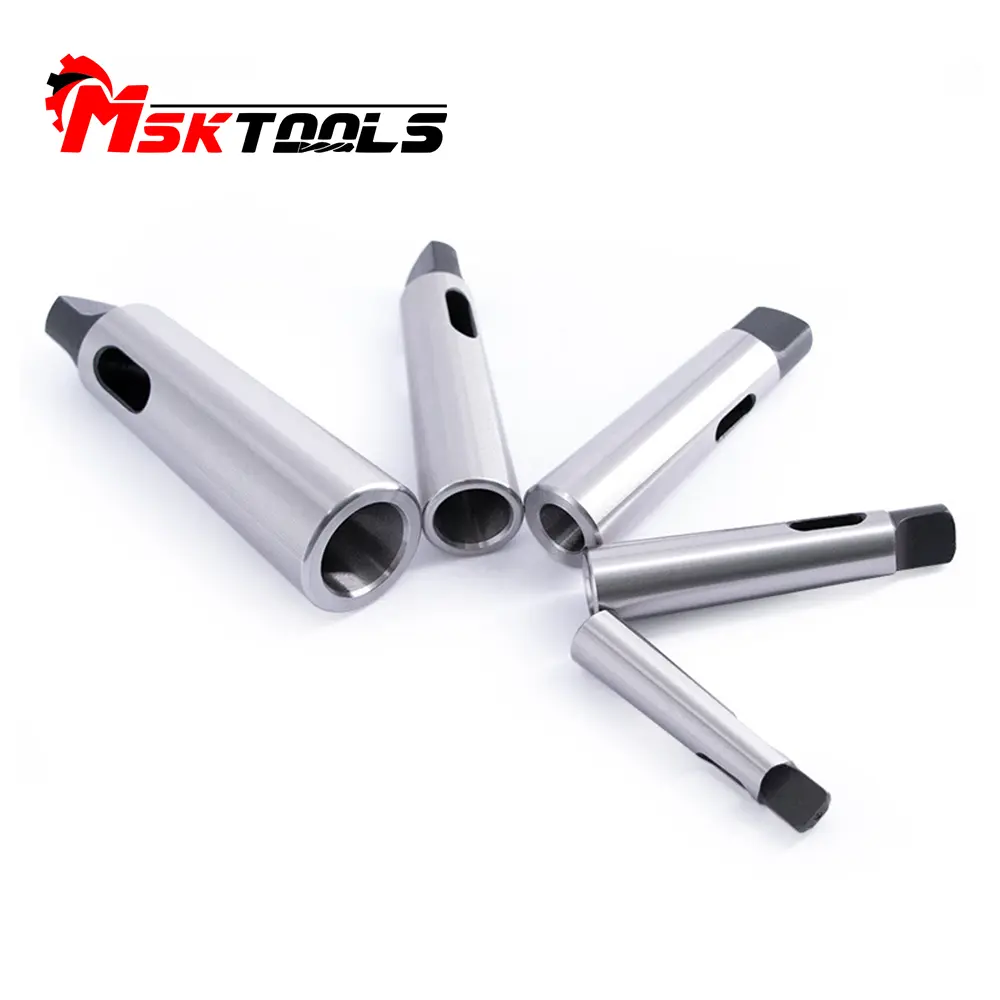
Practical Tips for Using Reducing Sleeves
- Always clean both tapers before assembly. A speck of dust or oil film can reduce grip by 30% and cause fretting wear.
- Use a wedge or drift to remove a stuck sleeve—never hammer on the tool itself. Most sleeves have a slot or tang to engage the drift.
- Rotate sleeves periodically if you have multiple tools. This distributes wear and prevents the internal taper from “memory” seating, which can lead to runout over time.
- Check for wear marks. If you see bright rings inside the sleeve, the taper contact is uneven—time to replace it.
Why Quality Matters in a Reducing Sleeve
We see it all the time: a shop buys a cheap import sleeve, struggles with tool slippage, blames the tool, and ends up scrapping parts. The culprit is almost always poor taper fit—insufficient contact area (less than 70% of the surface) and excessive taper angle variation.
At Msk (the factory behind the MT2‑1, MT3‑1, and MT3‑2 sleeves you’re looking at), we grind both external and internal tapers on CNC‑controlled machines, with 100% red‑check inspection on every sleeve. The result: consistent 85%+ contact ratio, which translates to maximum torque transmission and minimal runout.
We also use case‑hardened bearing steel (GCr15) rather than soft mild steel, so the sleeve resists deformation even after thousands of tool changes. If you’re running production shifts, that longevity pays for itself within months.
Final Verdict: Which Sleeve Do You Need?
Here’s a cheat sheet based on common machine setups, using the exact dimensions from our production line:
| Your Machine Spindle (measure D) | Your Tool Shank (measure d) | Recommended Sleeve | Length (mm) |
|---|---|---|---|
| MT3 (23.825 mm) – e.g., milling machine | MT2 (17.78 mm) – e.g., drill chuck | MT3‑2 | 112 |
| MT2 (17.78 mm) – e.g., small lathe | MT1 (12.065 mm) – e.g., countersink | MT2‑1 | 92 |
| MT3 (23.825 mm) – e.g., radial drill | MT1 (12.065 mm) – old tooling | MT3‑1 | 99 |
When in doubt, MT3‑2 is the sleeve you’ll reach for 9 times out of 10—it’s the universal bridge between the most common spindle and the most common tool shank.
Beyond MT1‑MT3: More Options for Larger Shops
We also manufacture reducing sleeves for MT4, MT5, MT6, and metric 80/100 series tapers. If your machine uses a larger spindle (e.g., MT4 with D=31.267 mm) and you need to hold MT2 tools (d=17.78 mm), we have MT4‑2 (length 124 mm). The same principle applies: match D to spindle, d to tool. For exact dimensions, refer to our full catalogue—or just ask us.MT reducing sleeve
Where to Get Precision‑Ground Sleeves Without the Wait
We stock MT2‑1, MT3‑1, and MT3‑2 sleeves ready for same‑day shipping. Every unit is individually inspected and comes with a traceable report. If you’re a workshop or an OEM looking for custom branding, we offer private labeling and bulk pricing.
Have a specific machine‑tool combo? Drop us a message with your spindle and tool sizes—we’ll confirm the exact sleeve you need and even share a simple guide on taper inspection. No obligation, just straight answers.
Because the right fit shouldn’t be a guessing game—and the numbers shouldn’t be a mystery.

About MSK
Since our founding in 2015, MSK (Tianjin) International Trading Co., Ltd. has steadily expanded its footprint in the cutting tool industry. We earned ISO 9001 certification from Rheinland in 2016, underscoring our commitment to quality management. Our workshop is equipped with state-of-the-art machinery, including German SACCKE five‑axis grinding centers, a ZOELLER six‑axis tool inspection system, and precision grinders from Taiwan's PALMARY brand – all enabling us to produce high‑performance CNC tooling.
We offer a comprehensive range of stocked items: end mills, thread taps, drill bits, inserts, collet chucks, tool holders, dies, and machine accessories. Whether you need standard off‑the‑shelf solutions or fully customized products, our experienced team is ready to assist. Simply provide your required quantity and technical drawings; we handle the engineering and production from there.
Our clients span diverse sectors – from manufacturing plants and machine shops to maintenance facilities, tool‑and‑die workshops, as well as institutional buyers like hospitals, hotels, universities, and even individual craftspeople. We pride ourselves on responsive service, reliable delivery, and technical expertise that ensures you get the right tool for the job – every time.
Hot selling products
Post time: Jul-02-2026


