Walk through almost any job shop, and you’ll find the same bottleneck: someone standing at a bench, manually tapping a stack of parts, hoping the tap doesn’t snap on the last hole. It’s slow, it’s inconsistent, and on materials like stainless steel, it’s a gamble. An electric tapping arm machine flips that script completely. It brings CNC-controlled consistency right to the workpiece — no need to move the part to a machining center just for threading.
And when that tapping arm comes with a wide-radius flex arm and enough servo torque to push an M36 tap through steel, you’re not just eliminating hand work. You’re rethinking how fast a batch can flow from drilling to finished threads. That’s what our MSK CNC hydraulic automatic flex arm drilling and tapping machine is built for — and yes, despite the long name, it’s surprisingly simple to live with.
Let’s unpack what that means on a real shop floor.
What Exactly Is a Flex Arm Tapping Machine?
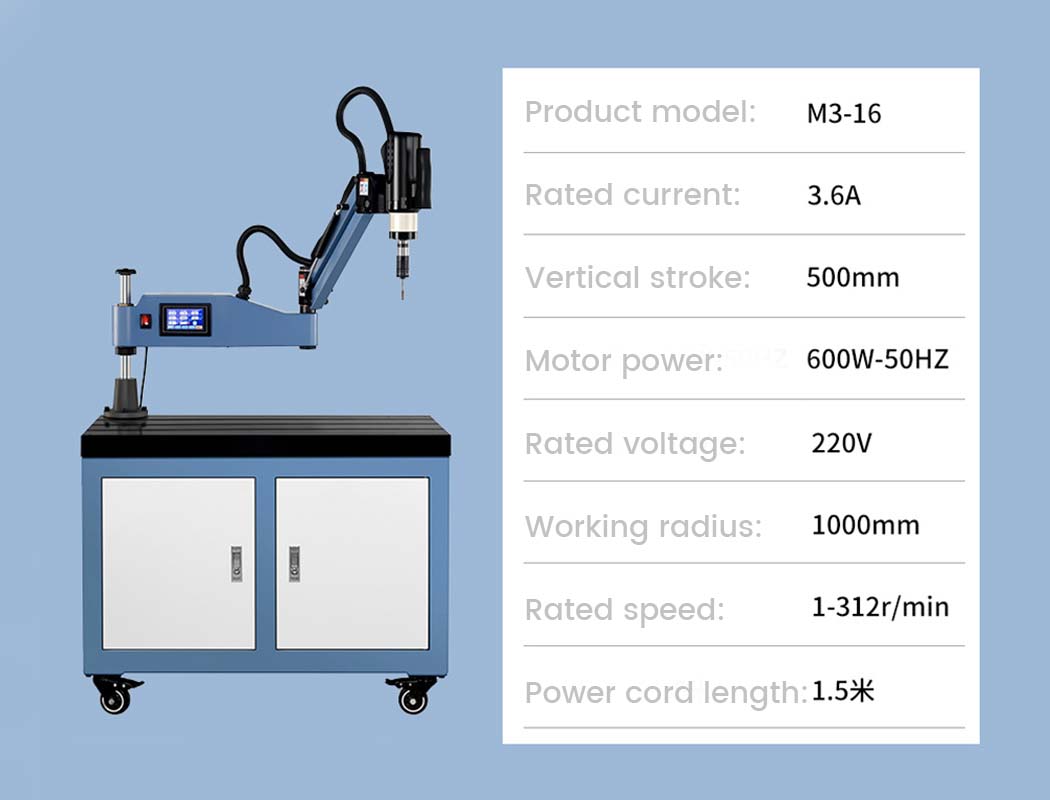
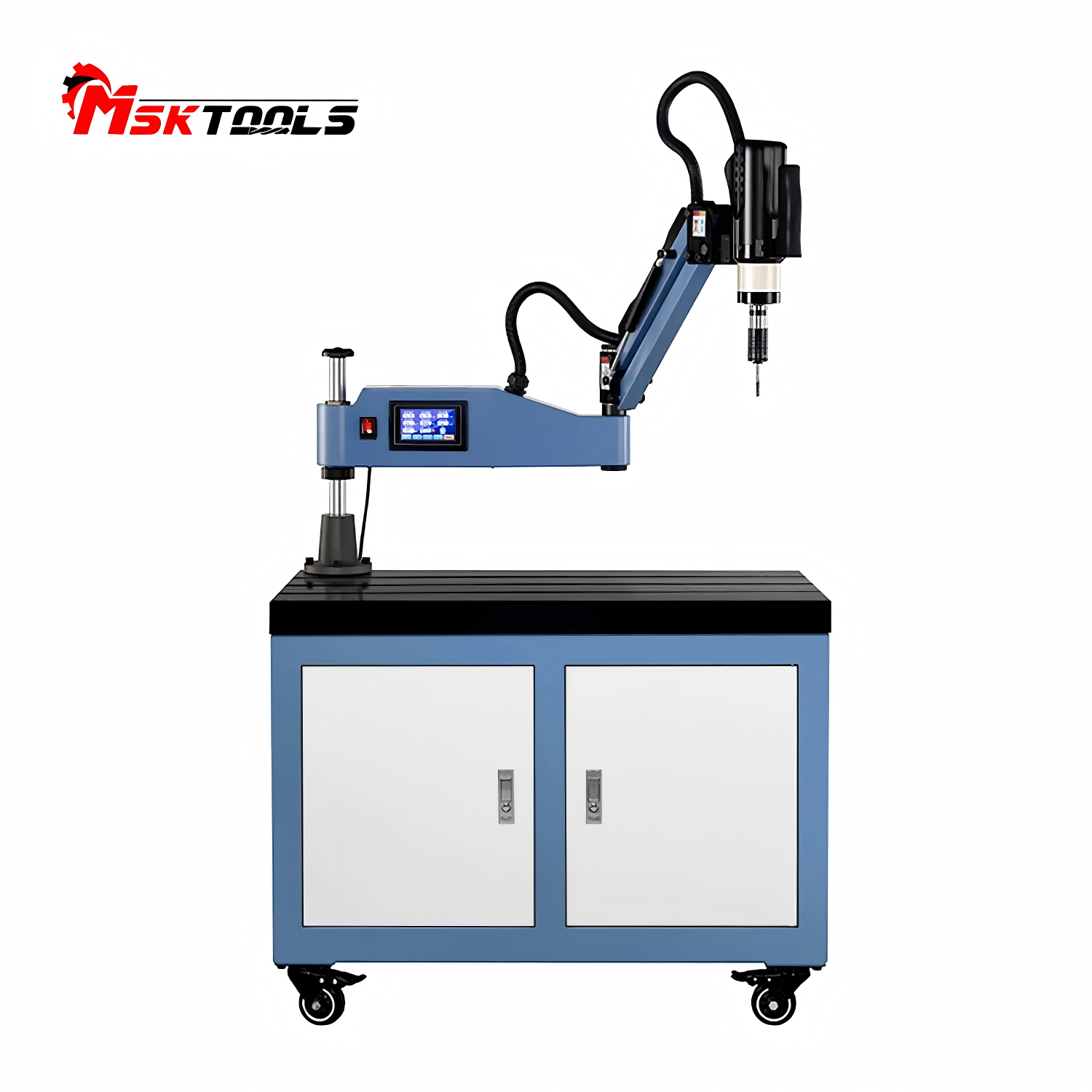
Think of a counterbalanced, articulated arm that carries a servo-driven tapping head. You grab the control handle, swing the tap to the hole location, and pull down. The spindle starts, feeds at the correct pitch, and reverses out the moment you ease up on the pressure. No programming, no coordinate setup. This is a flex arm tapping machine in its purest form: a “point-and-tap” tool that handles everything from tiny M3 threads in aluminum brackets to coarse M36 threads in heavy steel weldments.
The “automatic” part comes from how the machine manages the entire cycle — forward feed, depth sensing, and reverse — without the operator needing to flip switches. That’s why we also refer to it as an automatic drilling and tapping machine: while its superpower is tapping, the same smooth vertical motion and stable quill let you run a drill chuck or chamfer tool when needed. For shops doing mixed work, that dual-purpose capability matters a lot.
Why an Electric Tapping Arm Over a Pneumatic One?
Pneumatic tappers have their place, but they struggle with torque consistency. When you hit a slightly hard spot in a casting, air pressure fluctuates, and threads get ragged. A servo motor doesn’t care. It delivers constant torque at low speed, pulling the tap through evenly. That’s a big deal on materials that work-harden — 304 stainless, duplex, even titanium.
Our MSK tapping arms use a high-performance servo motor matched to a rigid swing-arm stand. The result is stable torque from the first hole to the hundredth, with minimal tap wear. And because the arm counterbalance is designed right, you can position the tap over a large working radius — up to 1200mm on the larger models — without fatigue. That means you can tap multiple holes spread across a big fabrication without repositioning the workpiece. Anyone who has ever wrestled a large weldment into a drill press knows what that’s worth.
Key Features That Make a Difference on Real Jobs
1. Fast repeat positioning — not a gimmick
When you’re doing twenty identical housings, you want the tap to find the hole just as fast on the last part as it did on the first. The arm’s joints and depth stop let operators move rapidly between holes and hit consistent depth every time. It cuts cycle time and takes stress out of the job.
2. Tap protection that actually works
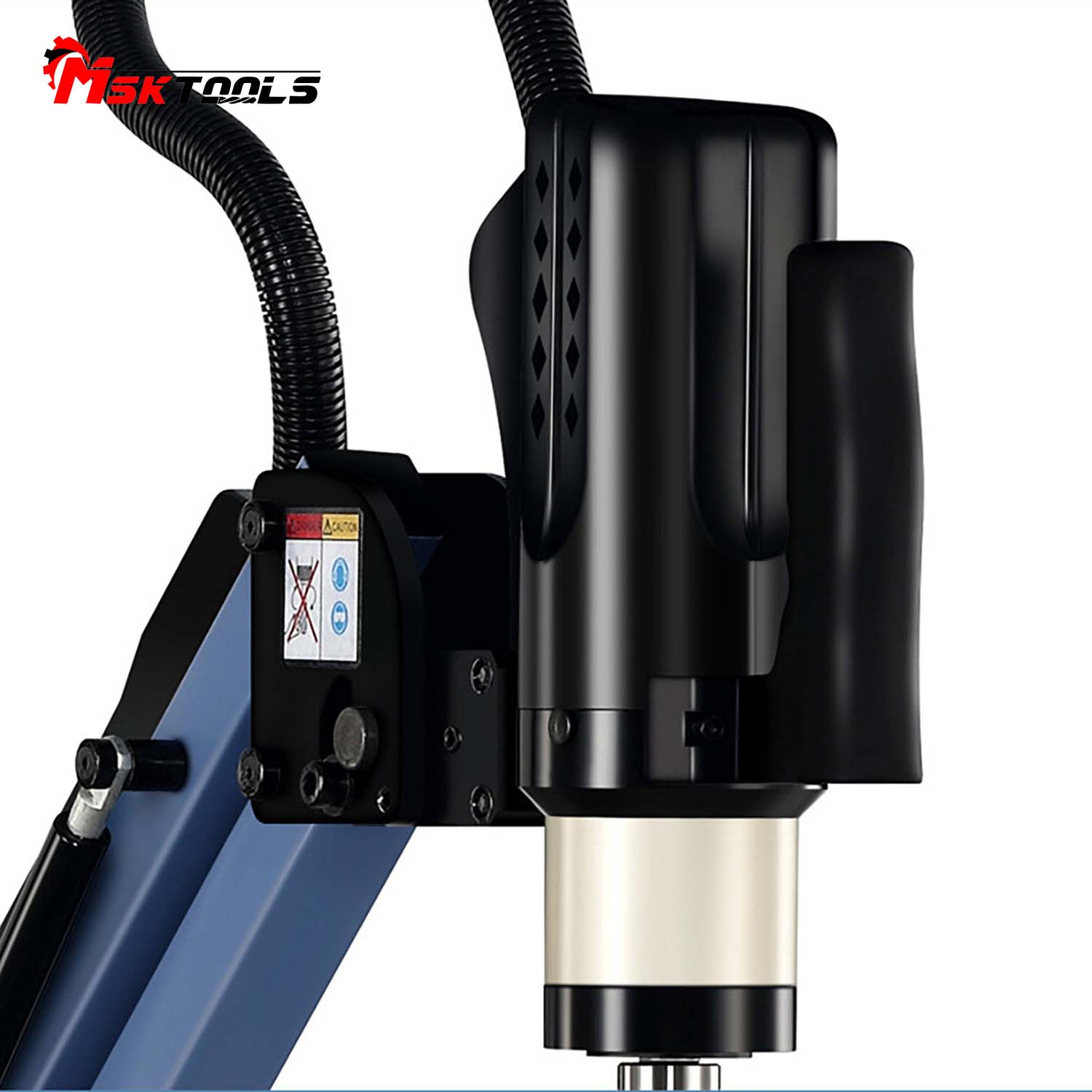
Broken taps are expensive in more ways than one. The machine’s simple clamping system and precise vertical alignment keep the tap perpendicular to the work. There’s no side-loading, no wobble. On through-hole and blind-hole tapping alike, you’ll see fewer chipped edges and longer tool life.
3. Wide tapping range — one arm, many jobs
From M3 to M36, the range across our models means a single flex arm can cover the bulk of your work. Need to tap M10 holes in stainless all day? The M3-12E or M3-16E will breeze through it. Occasional M24 structural threads? The M6-24E model has the torque and speed you need. No need for multiple dedicated machines.
4. Simple controls, less training
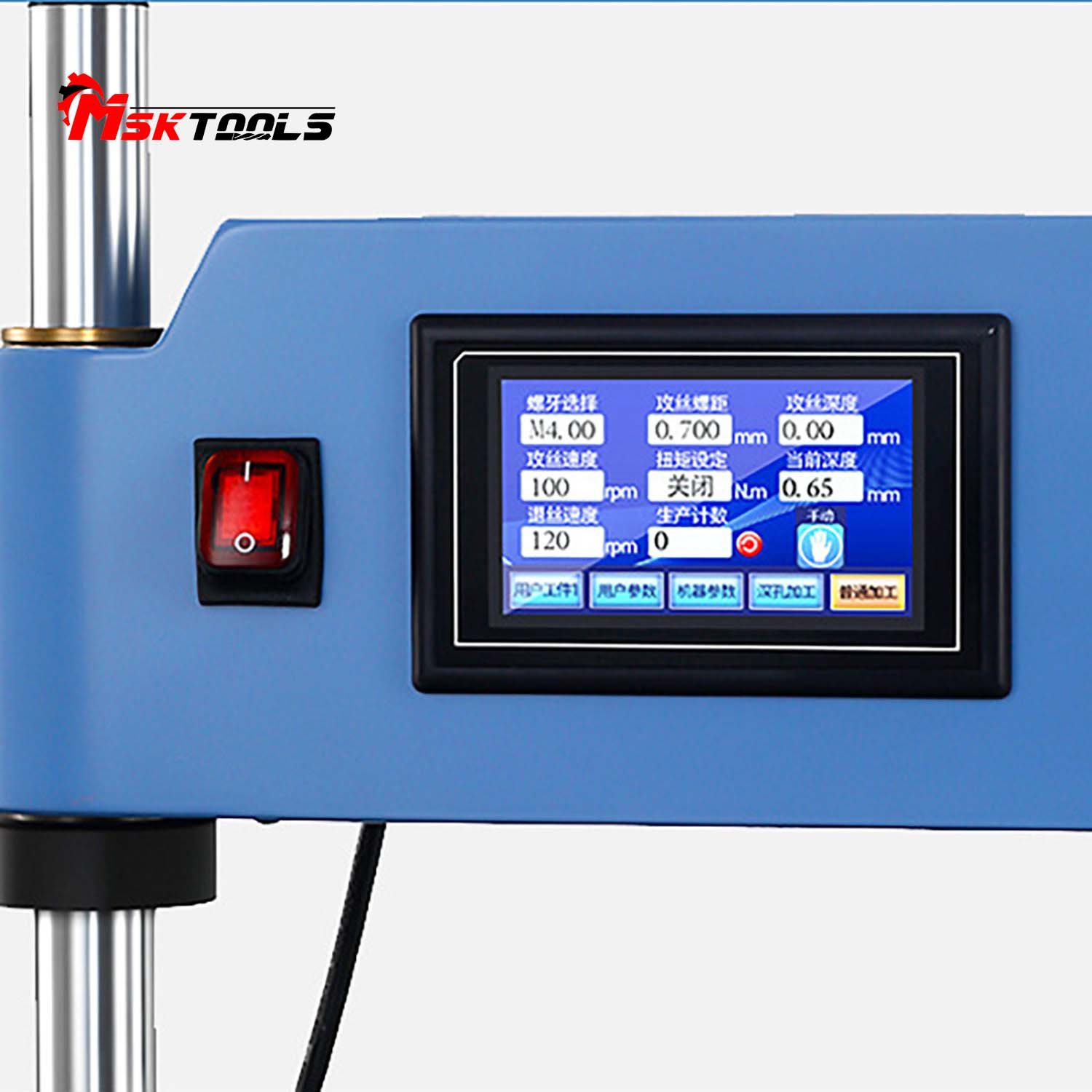
Operators don’t need CNC programming background. The controls are intuitive: pull to start, slight up-pressure to reverse. That lowers the barrier for entry, so you can cross-train people quickly.
5. Built to last in industrial environments
The arm is constructed for daily shop use. With proper care, the servo motor and mechanical assembly deliver years of service. That’s not marketing talk — it’s what you expect from equipment produced in a factory running German SACCKE grinding centers and ISO 9001 quality management. The same production discipline that goes into our cutting tools applies here.
Model Range at a Glance — Find the Right Electric Tapping Arm
The table below gives you a quick selection guide. All models run on 220V single-phase power and come with national standard collets. Vertical and universal (multi-angle) configurations are available.
Light to medium duty – 600W to 800W motors
| Model | Radius | Motor | Tapping Range | Max Capacity in Steel |
|---|---|---|---|---|
| M3-10E | 1000mm | 600W | M3–M10 | < M8 (steel), < M10 (Al/Cu) |
| M3-12E | 1000mm | 600W | M3–M12 | < M10 (steel), < M12 (Al/Cu) |
| M3-16E | 1000mm | 600W | M3–M16 | < M14 (steel), < M16 (Al/Cu) |
| M3-20E | 1000mm | 800W | M3–M20 | < M18 (steel), < M20 (Al/Cu) |
Heavy duty – 1200W motors, extended radius
| Model | Radius | Motor | Tapping Range | Max Capacity in Steel |
|---|---|---|---|---|
| M3-20ED | 1200mm | 1200W | M3–M20 | < M20 (steel), < M20 (Al/Cu) |
| M6-24E | 1200mm | 1200W | M6–M24 | < M22 (steel), < M24 (Al/Cu) |
| M6-30E | 1200mm | 1200W | M6–M30 | < M27 (steel), < M30 (Al/Cu) |
| M6-36E | 1200mm | 1200W | M6–M36 | < M33 (steel), < M36 (Al/Cu) |
When choosing, pay attention to your hardest material. If most of your work is in mild steel or aluminum, you can push the upper end of the range comfortably. For stainless and alloy steels, stay within the recommended limits to preserve tap life.
Where an Automatic Drilling and Tapping Machine Shines
We see these arms put to work in environments that span the full manufacturing spectrum:
Fabrication shops tapping mounting plates, gussets, and large chassis components that can’t easily go into a machining center.
Automotive and EV battery tray production, where dozens of threads need to be clean and consistent.
Heavy equipment repair — chasing threads on excavator parts or structural frames right on the shop floor.
Production lines integrating the arm into a cell for semi-automatic tapping of housings, flanges, and castings.
And because the arm swings to the work, not the other way around, it naturally suits flexible manufacturing and mixed-model production. You can roll a welding table next to the arm, tap a batch of parts, and wheel it away when the next job comes in.
Why Buy From MSK?
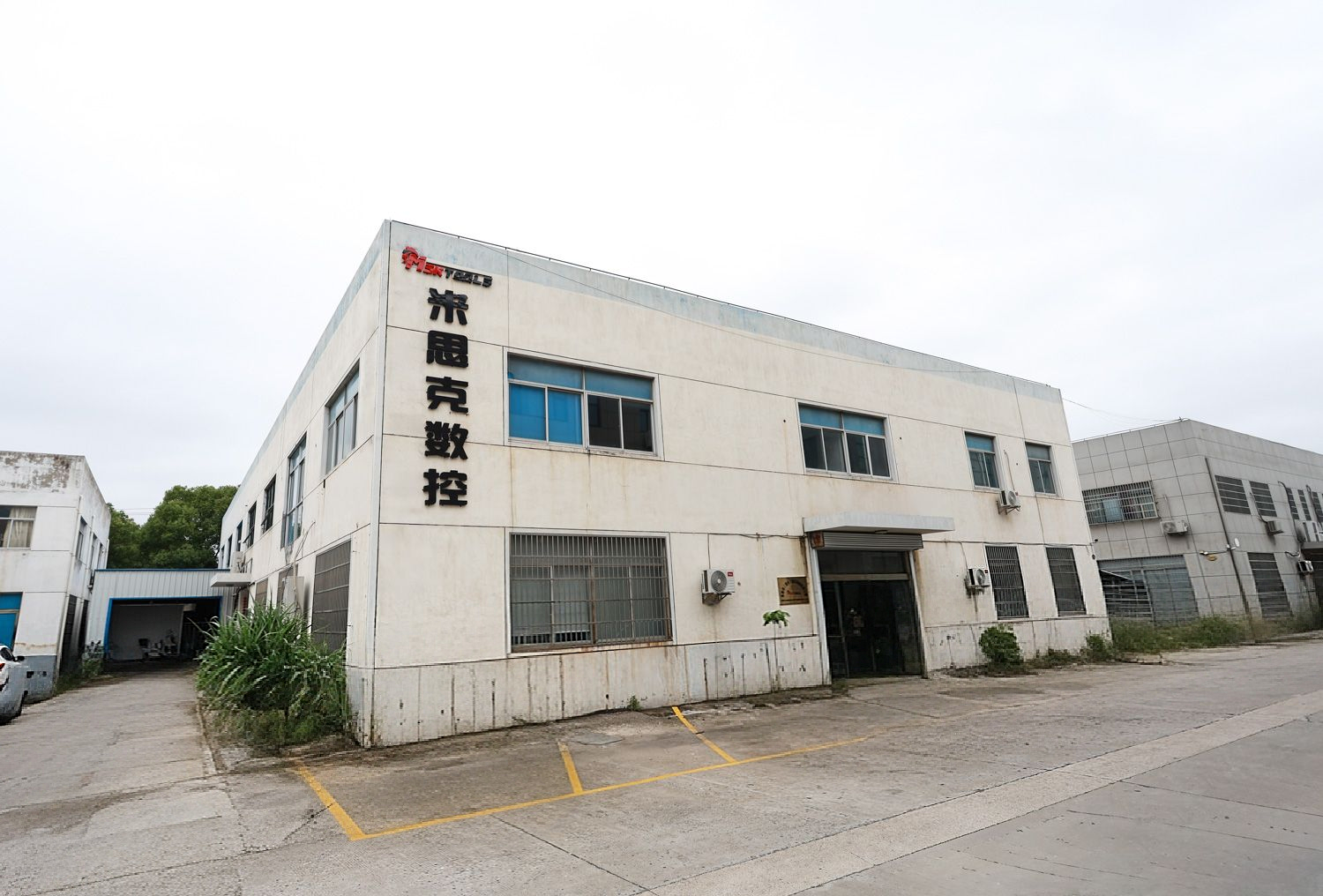
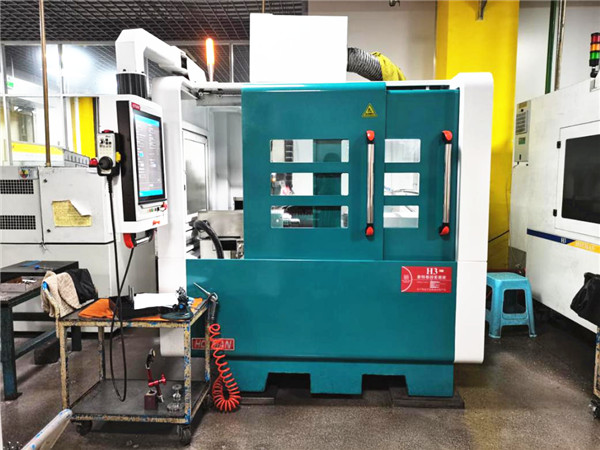
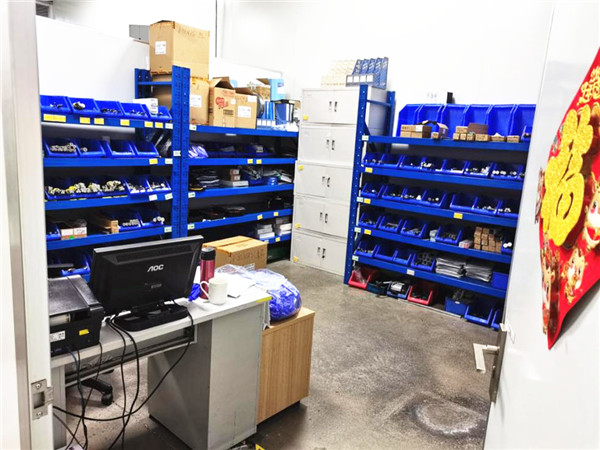
MSK (Tianjin) Cutting Technology isn’t a reseller. We design and manufacture our own tooling and tapping equipment. With ISO 9001 certification and a factory equipped with precision grinding and inspection systems, we apply the same quality-first thinking to our flex arm machines as we do to our solid carbide end mills and drills.
When you reach out, you deal directly with the engineering team — not a call center. We respond within 48 hours with answers, quotes, and technical recommendations. We ship to freight forwarders across China, support OEM labeling, and stand behind the equipment with after-sales service and technical guidance.
Ready to Stop Hand Tapping?
Whether you call it an electric tapping arm machine, a flex arm tapping machine, or an automatic drilling and tapping machine, the result is the same: faster, safer, more accurate threads. If you’re tired of the tap breakage and uneven thread quality that come with manual tapping, it’s worth a closer look. Tell us what you’re tapping — material, thread size, and batch volume — and we’ll recommend the right MSK arm to get the job moving.
Hot selling products
Post time: Jul-24-2026


