The aerospace industry operates at the bleeding edge of material science and manufacturing precision. Every gram saved translates to increased payload, extended range, and reduced fuel burn. Every joint must withstand extreme stresses, vibrations, and environmental conditions with absolute reliability. Creating high-strength, lightweight threaded connections in thin, advanced materials like titanium alloys, high-strength aluminum, and composites presents unique challenges that often push conventional machining and fastening techniques to their limits. Thermal Friction Drilling (TFD), empowered by specialized Carbide Flow Drill Bits and robust Thermal Friction Drill Bit Sets, is emerging as a transformative solution, conquering these exotic materials and enabling new design possibilities in the skies and beyond.
The Aerospace Fastening Crucible: Weight, Integrity, Exotic Materials
Aerospace engineers face a triad of demanding requirements:
Weight is Paramount: The tyranny of the rocket equation reigns. Every fastener, every added nut, every gram of superfluous material is scrutinized.
Uncompromising Strength & Fatigue Life: Connections in airframes, engines, and critical systems must endure immense cyclic loads without failure. Thread pull-out strength and resistance to vibration-induced loosening are non-negotiable.
Material Challenges: Aerospace relies on materials prized for their strength-to-weight ratio but notoriously difficult to machine:
Titanium Alloys (e.g., Ti-6Al-4V): Exceptional strength and corrosion resistance, but poor thermal conductivity, high chemical reactivity, and work hardening tendencies make conventional drilling and tapping prone to rapid tool wear, heat-induced damage, and poor surface integrity.
High-Strength Aluminum Alloys (e.g., 7075, 2024): Prone to stress corrosion cracking (SCC). Heat input from welding or excessive machining can exacerbate this risk and degrade mechanical properties.
Composites (CFRP, GFRP): Anisotropic, abrasive, and highly sensitive to delamination and fiber damage during hole creation. Traditional metal fastening methods often require complex inserts or potting, adding weight and complexity.
Conventional Methods Under Strain:
Tapping Thin Sections: Offers minimal thread engagement, low strength, and high risk of tap breakage in tough alloys.
Inserts (Helicoil®, Rivet Nuts): Add weight, cost, and process steps. Installation can damage composites. Reliability under extreme vibration can be a concern.
Welded/Bonded Studs/Nuts: Introduce significant heat input (risking material properties in Al/Ti), potential distortion, and HAZ issues. Not feasible for composites.
Specialty Fasteners: Often heavy, expensive, and still require robust hole preparation.
Flow Drills Take Flight: Mastering the Demanding Trio
Thermal Friction Drilling addresses the aerospace challenge head-on, leveraging its unique material transformation capabilities:
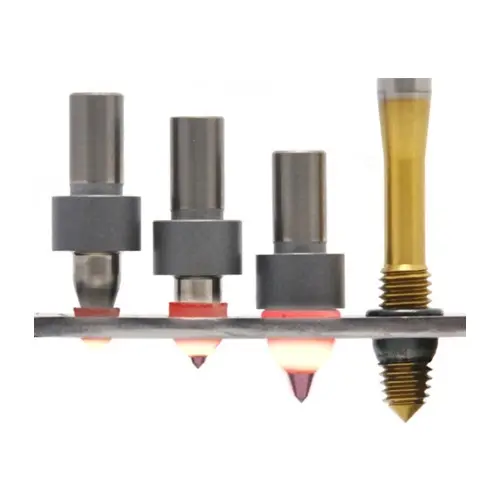
Creating Integral Strength from Thin Gauges: The core principle remains: a Carbide Flow Drill Bit, rotating at high speed under high axial load, generates intense friction heat, plasticizing the material. Crucially, in aerospace alloys, this heat is highly localized due to the short process time and the tool's focused action. The plasticized metal is displaced to form a seamless, thick-walled bushing (~3x original thickness) directly from the parent material. This eliminates the need for added inserts or nuts.
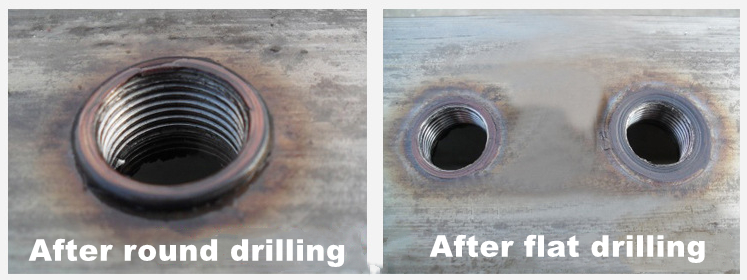
Threading into Fortified Material: Tapping occurs directly into this thick, integral bushing. This provides dramatically increased thread engagement length and pull-out strength compared to tapping the base thin sheet. The grain flow in the displaced material often results in improved fatigue resistance – a critical factor for aerospace components.
Conquering Exotic Alloys with Carbide Prowess:
Titanium: High-performance Carbide Flow Drill Bits, often featuring specialized coatings like AlCrN or nanocomposites resistant to titanium adhesion, withstand the extreme heat and reactivity. The rapid, localized heating minimizes the time for oxygen absorption and alpha-case formation. The plastic flow process can actually improve surface integrity compared to conventional cutting in some cases, reducing micro-crack initiation sites. Precise control of parameters (RPM, feed, force) is essential to manage heat input.
High-Strength Aluminum: TFD avoids the bulk heat input of welding, significantly reducing the risk of property degradation or SCC sensitization. The formed bushing provides ample material for strong threads without needing thick sections everywhere. Specialized tool geometries and coatings (e.g., AlTiN) minimize material adhesion (built-up edge).
Venturing into Composites: A Modified Approach: While traditional TFD is for metals, the principle is being adapted for thermoplastics and hybrid metal-composite structures:
Thermoplastic Composites (CFRTP, PEEK, PEKK): Using modified Flow Drill geometries and lower RPMs, friction heat softens the thermoplastic matrix. The tool displaces the softened composite material, forming a consolidated bushing. Tapping can then create threads within the composite itself, eliminating the need for metallic inserts in many non-structural or moderately loaded applications. This offers significant weight savings and process simplification.
Metal/Composite Hybrids: TFD can create the threaded boss in the metallic layer (e.g., aluminum sheet bonded to CFRP) before composite layup or bonding, providing a robust, integrated attachment point without drilling through the composite later (reducing delamination risk).
Weight Savings Amplified: Eliminating inserts, nuts, weld material, and potentially allowing thinner overall sections due to localized reinforcement leads to substantial weight reduction – the holy grail of aerospace.
Why Aerospace is Turning to Thermal Friction Drill Bit Sets:
Unmatched Strength-to-Weight Ratio: The integral bushing provides thread strength equivalent to much thicker material or added hardware, but without the weight penalty. This is the primary driver.
Enhanced Fatigue Performance: The cold-worked grain structure and absence of stress concentrators common with inserts or cut threads improve fatigue life in critical dynamic components.
Material Integrity Preservation: Precise control minimizes the HAZ in sensitive alloys like aluminum and titanium, preserving base material properties better than welding or excessive conventional machining.
Reduced Delamination Risk (Composites/Adhesives): For hybrids, creating the hole before composite application or bonding avoids drilling-induced damage. For thermoplastics, the forming process can consolidate fibers.
Process Simplification & Cost Reduction: Eliminates steps (insert installation, welding, bonding of fasteners), reduces part count, simplifies supply chains, and lowers assembly time and cost.
Sealed, Corrosion-Resistant Joints: The smooth, flow-formed hole surface in metals improves corrosion resistance and fluid sealing, beneficial for fuel cells, hydraulic lines, and exterior components.
High Repeatability & Automation Compatibility: CNC and robotic integration ensures precise, repeatable hole and thread quality, meeting stringent aerospace tolerances (NAS, BAC specifications). Process monitoring ensures consistency.
Key Aerospace Applications Soaring with Flow Drills:
Airframe Structures: Brackets, clips, doublers, and access panel mounts in thin aluminum or titanium skin panels, ribs, and stringers. Ideal for areas where added fasteners are prohibitive.
Engine Components & Mounts: Non-rotating parts, brackets, sensor mounts, heat shield attachments on casings (often thin Inconel or titanium), where vibration resistance and high-temperature performance are critical.
Interior Components: Seat tracks, monument mounting points (galleys, lavatories), overhead bin attachments – demanding strength and weight savings.
Flight Control Surfaces: Attachment points for actuators and linkages on thin-skinned ailerons, flaps, and rudders (aluminum or composites).
Landing Gear Components: Non-primary structural brackets and housings where weight reduction is valuable.
Satellite & Spacecraft Structures: Extreme weight sensitivity makes TFD highly attractive for brackets, electronic box mounts, and panel attachments in aluminum and titanium frames. The vacuum environment also makes sealed holes beneficial.
Unmanned Aerial Vehicles (UAVs/Drones): Where lightweighting is paramount and production volumes can justify the tooling investment.
Thermoplastic Composite Assemblies: Mounting bosses for interior panels, ducting, and low-stress structural attachments in PEEK or PEKK components.
The Aerospace-Grade Carbide Flow Drill Bit:
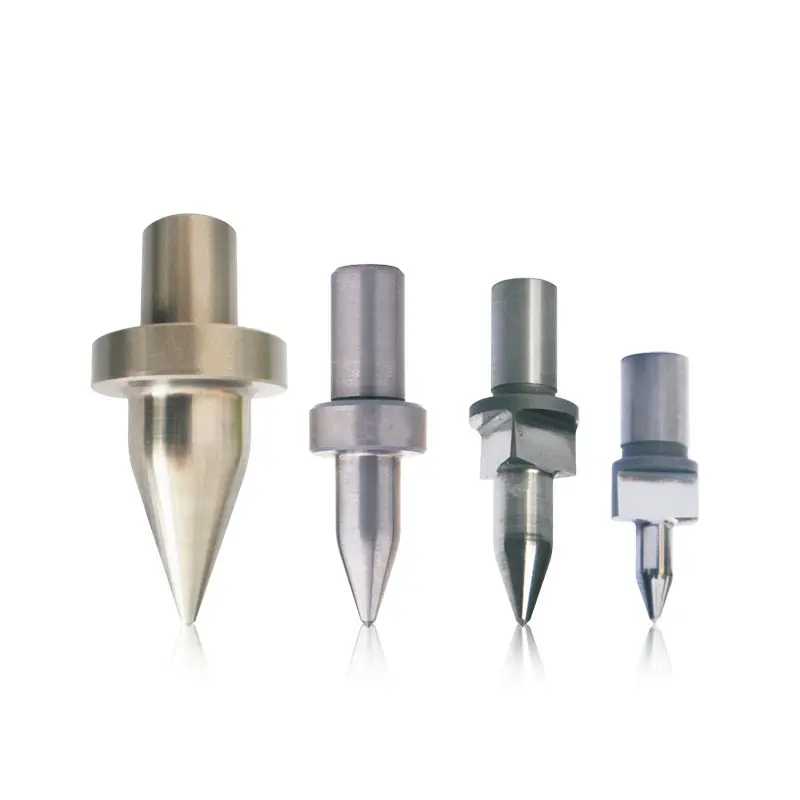
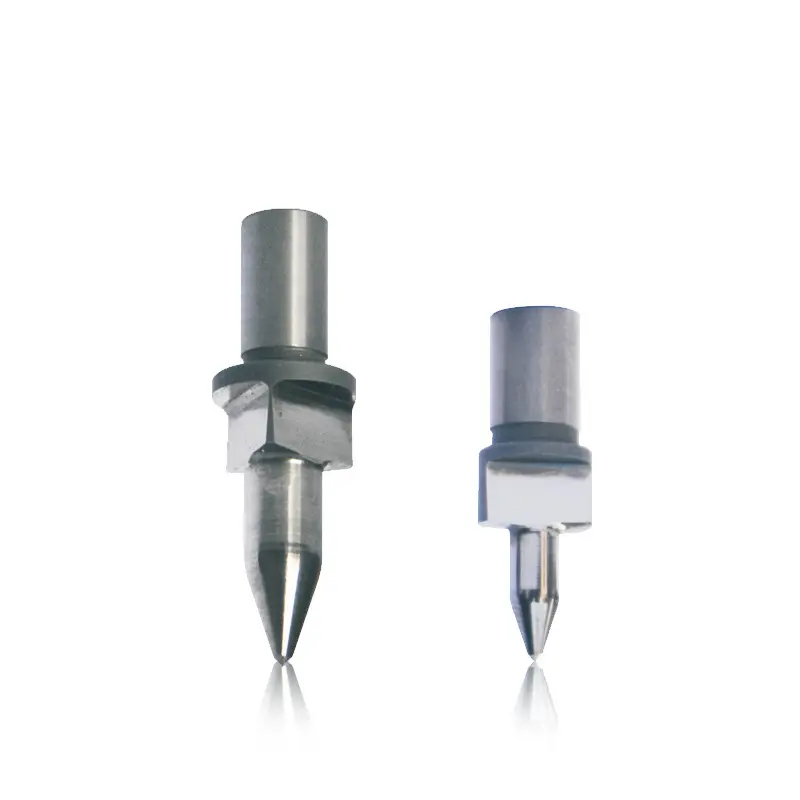
Aerospace demands push tooling to its zenith. Carbide Flow Drill Bits for aerospace alloys utilize ultra-fine grain or sub-micron carbide substrates for exceptional toughness and wear resistance. Coatings are meticulously engineered: AlCrN or AlTiN nanocomposites for titanium's reactivity, specialized diamond-like carbon (DLC) variants for aluminum adhesion resistance, and optimized for extreme temperature stability. Rigorous quality control ensures dimensional perfection and consistent performance essential for flight-critical applications. Tool life, while still finite, is optimized through parameter control and coating technology, providing a viable cost model for high-value aerospace components.
Overcoming Challenges & The Future Frontier:
Adoption requires meticulous process development:
Parameter Optimization: Precise control of RPM, feed rate, axial force, and dwell time is critical for each specific aerospace alloy to manage heat input, bushing formation, and tool life. Extensive testing and qualification are mandatory.
Surface Finish & Integrity: Post-processing (light reaming, honing) might be needed for critical fatigue applications, though the flow-formed surface is often superior to drilled surfaces.
Certification: Gaining approval for flight-critical applications involves rigorous testing (static, fatigue, environmental) to demonstrate equivalence or superiority over established methods.
Hybrid Material Strategies: Continued development for co-cured or bonded metal-composite joints is key.
Conclusion:
Thermal Friction Drilling is no longer confined to terrestrial steel applications. Armed with advanced Carbide Flow Drill Bits and sophisticated Thermal Friction Drill Bit Sets, it is proving its mettle in the demanding realm of aerospace. By transforming thin sections of titanium, high-strength aluminum, and even composites into thick, integral bushings ready for high-strength threading, TFD delivers the elusive combination of radical weight reduction and uncompromising joint integrity. It simplifies assembly, preserves material properties, and opens new design avenues. As aerospace continues its relentless pursuit of lighter, stronger, and more efficient vehicles, Flow Drill technology is poised to become an indispensable tool, helping engineers conquer the skies and beyond, one precisely formed, ultra-strong boss at a time. The conquest of aerospace alloys and composites is well underway.
Post time: Mar-06-2026


