Thermal Friction Drilling (TFD) has cemented its place as a transformative manufacturing process, enabling high-strength threading in thin materials across automotive, aerospace, and beyond. Yet, the relentless demands of modern production – faster cycle times, tougher materials, higher consistency, and lower cost-per-hole – constantly push the boundaries of what's possible. At the heart of this evolution lies the Carbide Flow Drill Bit, the critical component enduring extreme friction, heat, and pressure. Continuous innovation in carbide bit design, materials science, and manufacturing precision is unlocking new levels of performance, reliability, and application scope for Thermal Friction Drill Bit Sets.
The Crucible: Demands Driving Innovation
The operating environment for a Carbide Flow Drill Bit is arguably one of the harshest in machining:
Abrasive Wear: Displacing and flowing hot metal creates significant abrasive wear on the tool's flanks and tip geomety.
Adhesion & Built-Up Edge (BUE): Softened material can adhere to the bit, especially aluminum alloys, altering geometry and causing failure.
Thermal Shock: Rapid heating and cooling cycles during each operation induce thermal stresses.
Meeting these challenges requires constant advancement in four key areas:
1. Substrate Evolution: The Foundation of Toughness & Wear Resistance
The core carbide material itself is undergoing refinement:
Graded & Functionally Optimized Substrates: Innovations involve creating carbide substrates with gradient properties. A tougher, more cobalt-rich core enhances resistance to fracture and thermal shock, while a harder, wear-resistant outer layer maximizes edge retention and flank wear resistance. This is particularly beneficial for larger diameter bits or high-pressure applications.
2. Geometric Precision & Application-Specific Design
The geometry of the Flow Drill tip is paramount for efficient heat generation, material flow, and bushing formation. Modern design leverages advanced modeling (FEA, CFD) and real-world testing:
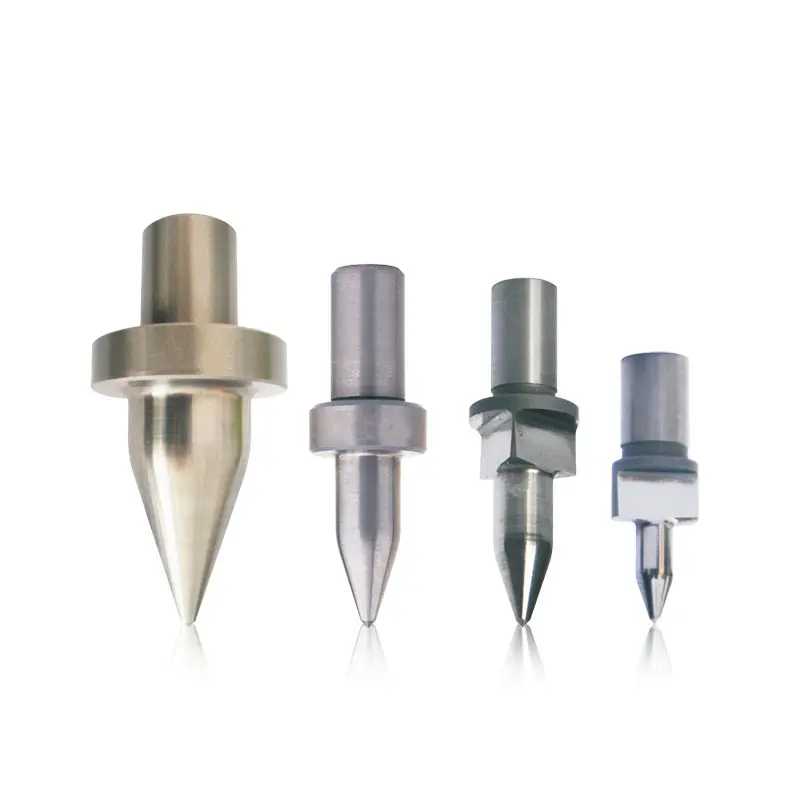
Optimized Point Angles & Web Thickness: Variations in point angle (e.g., 90° for steel, 130° for aluminum) and web thickness control the initial friction contact area, heat generation rate, and material displacement characteristics. New designs offer sharper points for faster penetration in soft materials and blunter, stronger points for hard alloys.
Advanced Flute & Land Geometry: The flute design (shape, depth, helix) must efficiently evacuate the displaced material while providing structural support. Optimized land widths and relief angles balance heat generation, wear resistance, and reduced friction on the flanks. Computational fluid dynamics helps model material flow and optimize chip evacuation.
Impact of Innovation: Tangible Benefits for Manufacturers
These advancements translate directly to the factory floor:
- Extended Tool Life: Advanced substrates and coatings can double or triple tool life compared to previous generations, dramatically reducing tooling costs and changeover frequency. A single Carbide Flow Drill Bit can now process tens of thousands of holes in aluminum or thousands in hardened steel.
- Higher Process Speeds & Throughput: More wear-resistant and thermally stable bits allow for increased RPM and feed rates without sacrificing quality or tool integrity, boosting production rates.
- Expanded Material Capability: Reliable processing of previously challenging materials like high-silicon aluminum, titanium alloys, duplex stainless, and even some composites becomes feasible.
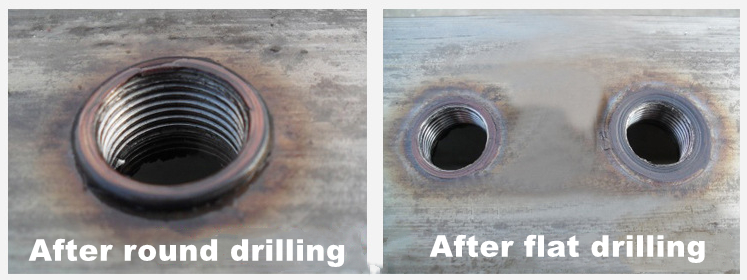
- Improved Consistency & Quality: Optimized geometry and coatings ensure repeatable hole diameter, bushing height, surface finish, and thread quality hole-after-hole, reducing scrap and rework.
- Reduced Downtime: Predictive monitoring and longer tool life minimize unplanned stops.
- Lower Cost-Per-Hole: Combining extended life, higher speeds, and reduced scrap delivers significant overall cost savings.
Case Study: EV Battery Tray Production
Consider a high-volume EV battery enclosure (3mm 6000-series aluminum):
- Challenge: Thousands of threaded holes needed; severe aluminum adhesion causes BUE and rapid failure with standard tools; cycle time critical.
- Innovation Solution: Carbide Flow Drill Bit with ultra-fine grain substrate, polished flutes, sharp aluminum-optimized geometry, and advanced ta-C coating.
- Result: Elimination of BUE; tool life increased from ~2,000 to over 15,000 holes; RPM increased by 25%; consistent high-quality bushings and threads; significant reduction in tool cost and downtime per tray.
The Future Frontier:
R&D continues relentlessly:
Smart Tools with Embedded Sensors: Bits with integrated temperature or strain sensors for direct process feedback.
Phase-Change Material (PCM) Enhanced Bits: Exploring materials within the tool structure that absorb and dissipate heat more effectively.
AI-Driven Design Optimization: Using machine learning to simulate and predict optimal geometries and coatings for new materials or specific application parameters.
Additive Manufacturing (AM) of Carbide Tools: Exploring AM to create complex internal cooling channels or functionally graded structures impossible with conventional sintering.
Conclusion:
The humble Carbide Flow Drill Bit is far from static. It is a pinnacle of advanced materials science, precision engineering, and tribological understanding. Continuous innovation in substrate composition, geometric intelligence, cutting-edge coatings, and systems integration is pushing the boundaries of Thermal Friction Drilling. These advancements are not just about making tools last longer; they are about enabling faster production rates, conquering tougher materials, achieving unprecedented consistency, and ultimately driving down the cost of creating high-strength, lightweight threaded connections. As the demands of manufacturing grow ever more stringent, the cutting-edge evolution of the Flow Drill ensures that Thermal Friction Drill Bit Sets remain a vital, high-performance solution for the factories of today and tomorrow. The quest for the perfect friction interface continues, fueled by relentless innovation at the tip.
Post time: Mar-30-2026


