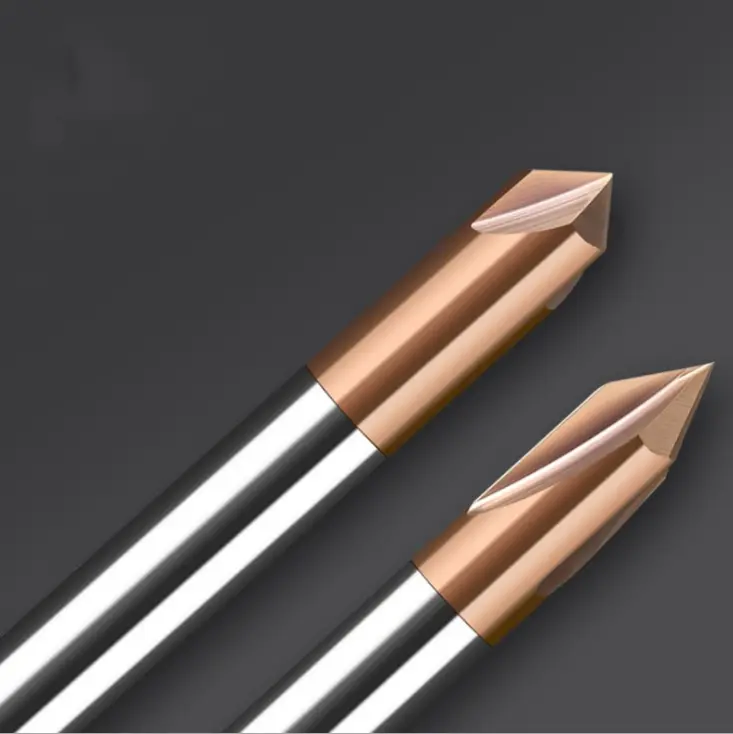
In the intricate world of metalworking, where complex CNC programs and high-tech machinery often steal the spotlight, a humble yet profoundly impactful tool is quietly transforming shop floors: the Solid Carbide Chamfer Bit. Specifically designed as a chamfering tool for drill presses and CNC machining centers, these unassuming Carbide Drill Bits Used For creating precise bevels and removing dangerous burrs are proving indispensable for manufacturers seeking efficiency, safety, and superior part quality.
Beyond Deburring: The Multifaceted Role of the Chamfer Bit
While deburring – the removal of sharp, hazardous edges left after cutting or milling – is a primary function, the modern metal chamfer bit does far more. The chamfer itself, a beveled edge, serves critical purposes:
Safety First: Eliminating razor-sharp edges protects operators during handling and assembly, significantly reducing workplace injuries. This is paramount in industries like automotive, aerospace, and medical device manufacturing.
Assembly Facilitation: A precise chamfer acts as a lead-in, guiding parts like pins, bolts, or bearings smoothly into holes or onto shafts, preventing binding and galling. This is crucial for high-volume assembly lines.
Aesthetics & Corrosion Resistance: A clean, uniform chamfer enhances the visual appeal of a finished part. More importantly, it provides a better surface for coatings like paint or plating to adhere, improving corrosion resistance by eliminating potential starting points for rust at sharp corners.
Stress Reduction: Removing sharp corners eliminates potential stress concentration points, which can be critical failure points under load, especially in high-performance components.
Why Solid Carbide? The Material Advantage
The choice of Solid Carbide for these chamfering tools is no accident. Compared to high-speed steel (HSS) alternatives, carbide offers:
Exceptional Hardness & Wear Resistance: Carbide withstands the abrasive nature of metals far longer, maintaining a sharp cutting edge through hundreds or even thousands of parts. This translates directly to reduced tool change frequency, lower tooling costs per part, and consistent quality over long production runs.
Higher Rigidity: Carbide's stiffness minimizes deflection during cutting, ensuring precise, consistent chamfer angles and depths, even under significant pressure. This rigidity is vital for maintaining tolerances in CNC applications.
Heat Resistance: Carbide retains its hardness at much higher temperatures than HSS, allowing for faster cutting speeds (where applicable) without compromising tool life or edge integrity.
The Power of 3 Flutes: Design Innovation
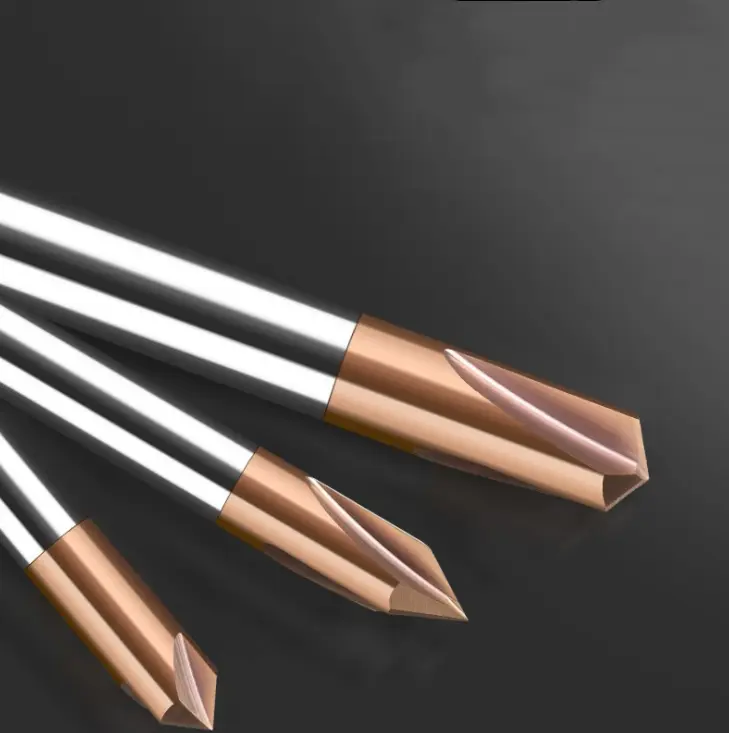
The prevalent 3 flute design found in high-performance metal chamfer bits is a key factor in their success:
Optimal Chip Evacuation: Three flutes provide ample space for efficient chip removal, preventing clogging and reducing the risk of re-cutting chips, which can damage the workpiece and the tool. This is particularly important when dealing with stringy materials like aluminum or stainless steel.
Superior Stability & Balance: The three-flute design offers excellent balance, minimizing vibration during operation. This results in smoother cuts, reduced noise, better surface finish on the chamfer, and extended tool life.
Versatility Bonus – Spot Drilling: This robust design also allows these tools to double as effective spot drills in softer materials (like aluminum, plastics, or wood). The rigid carbide tip creates an accurate, centered starting point for subsequent drilling operations, improving hole location accuracy and preventing drill bit "walking."
Applications Spanning Industries
The versatility of solid carbide chamfer bits makes them ubiquitous:
CNC Machining Centers: Automated chamfering of milled or drilled holes and part perimeters after primary operations, often integrated directly into the machining program.
Drill Presses & Manual Mills: Essential for deburring and chamfering holes and edges in job shops, maintenance departments, and prototyping.
Automotive: Chamfering engine blocks, transmission cases, brake components, and countless brackets and fittings.
Aerospace: Deburring and chamfering critical structural components, landing gear parts, and turbine elements where safety and precision are non-negotiable.
Medical Device Manufacturing: Creating burr-free, smooth edges on implants, surgical instruments, and diagnostic equipment.
General Fabrication: Preparing edges for welding, improving the finish on frames, brackets, and enclosures.
Conclusion: An Investment in Efficiency and Quality
The solid carbide chamfer bit, particularly the efficient 3-flute design, is far more than just a deburring tool. It's a strategic investment in manufacturing efficiency, operator safety, and final product quality. Its ability to perform consistently over long periods, handle demanding materials, and even perform secondary spotting functions underscores its value. As manufacturers continually seek ways to streamline processes and enhance part integrity, this "unsung hero" of the cutting tool world is rightfully claiming its place as an essential component of modern machining.
Post time: Aug-08-2025


