Chamfering – the process of beveling the edge of a workpiece – and deburring – the removal of sharp, hazardous edges left after cutting or machining – are critical finishing steps across countless industries, from aerospace and automotive to medical device manufacturing and general fabrication. Traditionally, these tasks could be time-consuming or require multiple tools.
Constructed entirely from premium solid carbide, these tools offer inherent advantages over traditional High-Speed Steel (HSS) options:
Superior Hardness & Wear Resistance: Carbide withstands significantly higher temperatures and resists wear far longer than HSS, translating to dramatically extended tool life, even when machining tough materials like stainless steel, titanium, and hardened alloys. This reduces tool change frequency and lowers per-part costs.
Enhanced Rigidity: The inherent stiffness of solid carbide minimizes deflection during cutting, ensuring consistent, precise chamfer angles and clean deburring results, critical for maintaining tight tolerances.
Higher Cutting Speeds: Carbide allows for much faster machining speeds than HSS, enabling manufacturers to reduce cycle times and boost productivity without sacrificing edge quality.
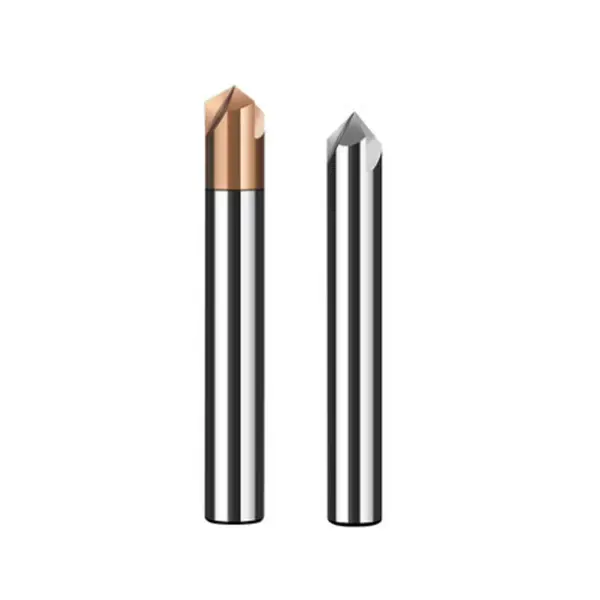
Beyond Chamfering: The Triple Advantage of 3 Flutes
A standout feature of this new series is its optimized 3-flute design. This configuration provides several key benefits specifically for chamfering and deburring:
Increased Feed Rates: The three cutting edges allow for significantly higher feed rates compared to single or double-flute designs. Material removal happens faster, slashing machining time for large batches or long edges.
Smoother Finishes: The additional flute enhances surface finish quality on the chamfered edge, often reducing or eliminating the need for secondary finishing steps.
Improved Chip Evacuation: The design facilitates efficient removal of chips from the cutting zone, preventing chip recutting (which damages the tool and workpiece) and ensuring a cleaner cut, especially in blind holes or deep chamfers.
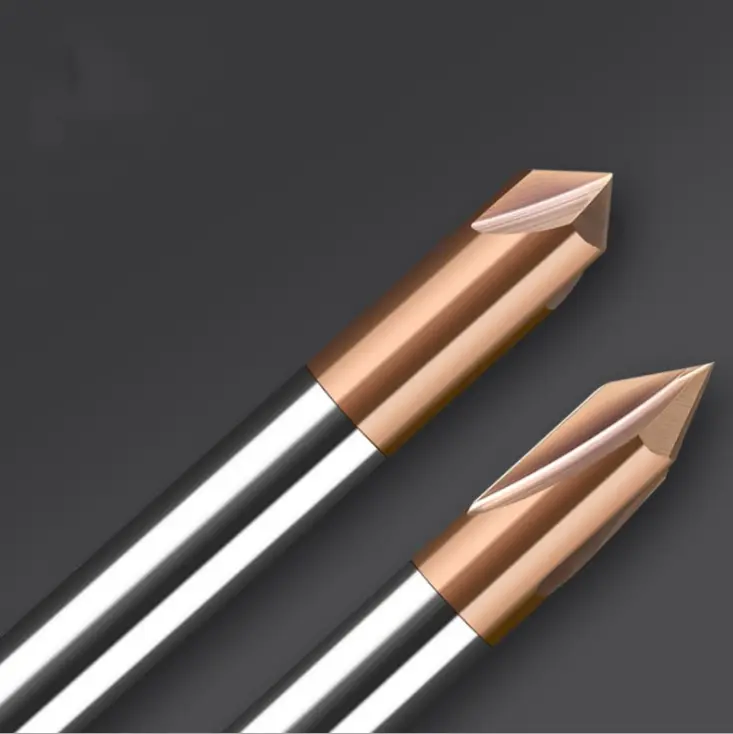
Unexpected Versatility: Doubling as a Spot Drill
While primarily designed for chamfering and deburring, the robust solid carbide construction and precise point geometry of these 3-flute tools make them exceptionally suitable for spot drilling holes in soft materials like aluminum, brass, plastics, and mild steel.
"Instead of needing a dedicated spot drill for every setup, machinists can often use their chamfer tool. It saves time on tool changes, reduces the number of tools needed in the carousel, and simplifies setups, particularly for jobs involving both hole-making and edge finishing. It’s efficiency built right into the tool."
Applications & Recommendations
The metal chamfer bits are ideal for:
Creating precise, clean 45-degree chamfers on machined edges and holes.
Efficiently deburring parts after milling, turning, or drilling operations.
High-speed chamfering in CNC machining centers for production runs.
Manual deburring tasks on the bench or with handheld tools.
Spot drilling pilot holes in non-ferrous and softer materials.
Post time: May-19-2025


