In the vast pantheon of tools that have shaped human civilization, from the humble lever to the complex microchip, one tool stands out for its ubiquity, simplicity, and profound impact: the straight shank twist drill bit. This unassuming cylindrical piece of metal, with its precisely engineered spiral grooves, is the fundamental instrument of creation and assembly, found in every workshop, factory, and household across the globe. It is the key that unlocks the potential of solid materials, allowing us to join, fasten, and create with unparalleled precision.
While the act of drilling is ancient, dating back to prehistoric times using sharpened stones and bows, the modern twist drill bit is a product of the Industrial Revolution. The critical innovation was the development of its helical flute, or spiral groove. The primary function of this groove is twofold: to efficiently channel chips (the waste material) away from the cutting face and out of the hole being drilled, and to allow cutting fluid to reach the point of contact. This prevents overheating, reduces friction, and ensures a clean, accurate hole. While spiral grooves can have 2, 3 or more grooves, the 2-flute design remains the most common, offering an optimal balance of cutting speed, chip removal, and bit strength.
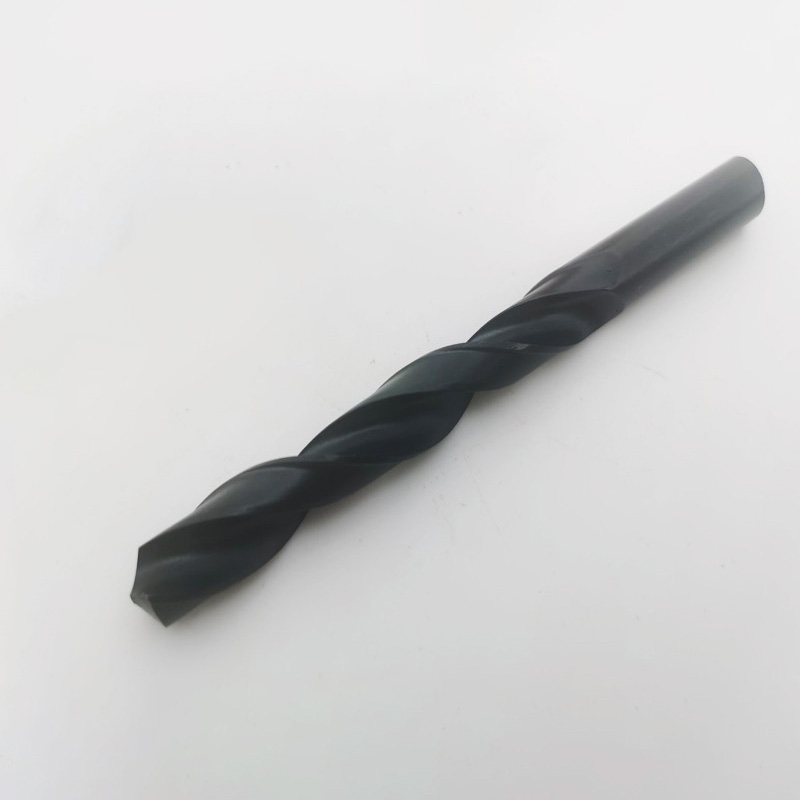
The versatility of the straight shank twist drill bit is encapsulated in its name. The "straight shank" refers to the cylindrical end of the bit that is clamped into a tool's chuck. This universal design is its greatest strength, enabling compatibility with a staggering array of machinery. It can be securely clamped in a simple manual hand drill, a powerful electric handheld drilling tool, or a massive stationary drilling machine. Furthermore, its utility extends beyond dedicated drilling equipment; it is a standard tooling component in milling machines, lathes, and even sophisticated computer-controlled machining centers. This universality makes it the lingua franca of the machining world.
The material composition of the drill bit is tailored to its task. The most common material is High-Speed Steel (HSS), a specially formulated grade of tool steel that retains its hardness and cutting edge even at the high temperatures generated by friction. HSS bits are incredibly durable and cost-effective, suitable for drilling into wood, plastic, and most metals. For the most demanding applications, such as drilling through abrasive materials like stone, concrete, or extremely hard metals, carbide-tipped or solid carbide drill bits are employed. Carbide, a composite material containing tungsten carbide particles bonded with cobalt, is significantly harder than HSS and offers vastly superior wear resistance, though it is also more brittle.
From the assembly of aerospace components to the crafting of fine furniture, the straight shank twist drill bit is an indispensable enabler. It is a testament to the idea that the most impactful innovations are often those that perform a single, critical function with flawless efficiency. It is not merely a tool; it is the foundation upon which modern manufacturing and DIY ingenuity are built, one precise hole at a time.
Post time: Aug-14-2025


