In the field of precision machining, the symmetry of workpiece positioning and clamping directly affects machining accuracy and process stability. Traditional vises use a single-sided moving clamping method, which easily leads to workpiece center offset, accumulating positioning errors during repeated clamping. In recent years, the Self Centring Vise, as an innovative product achieving symmetrical centering clamping, has become a key process equipment in high-precision scenarios such as mold manufacturing and precision parts machining due to its core advantages such as bidirectional synchronous motion and constant center positioning.
The core technological breakthrough of the self centring vise lies in its bidirectional synchronous transmission mechanism. Unlike the conventional vise design where one side is fixed and the other side moves, this product uses a precision lead screw or gear rack mechanism to make both jaws move towards the center at a uniform speed simultaneously. Regardless of changes in workpiece size, its centerline always coincides with the vise's centerline. This design fundamentally solves the workpiece offset problem caused by single-sided clamping in traditional vises.
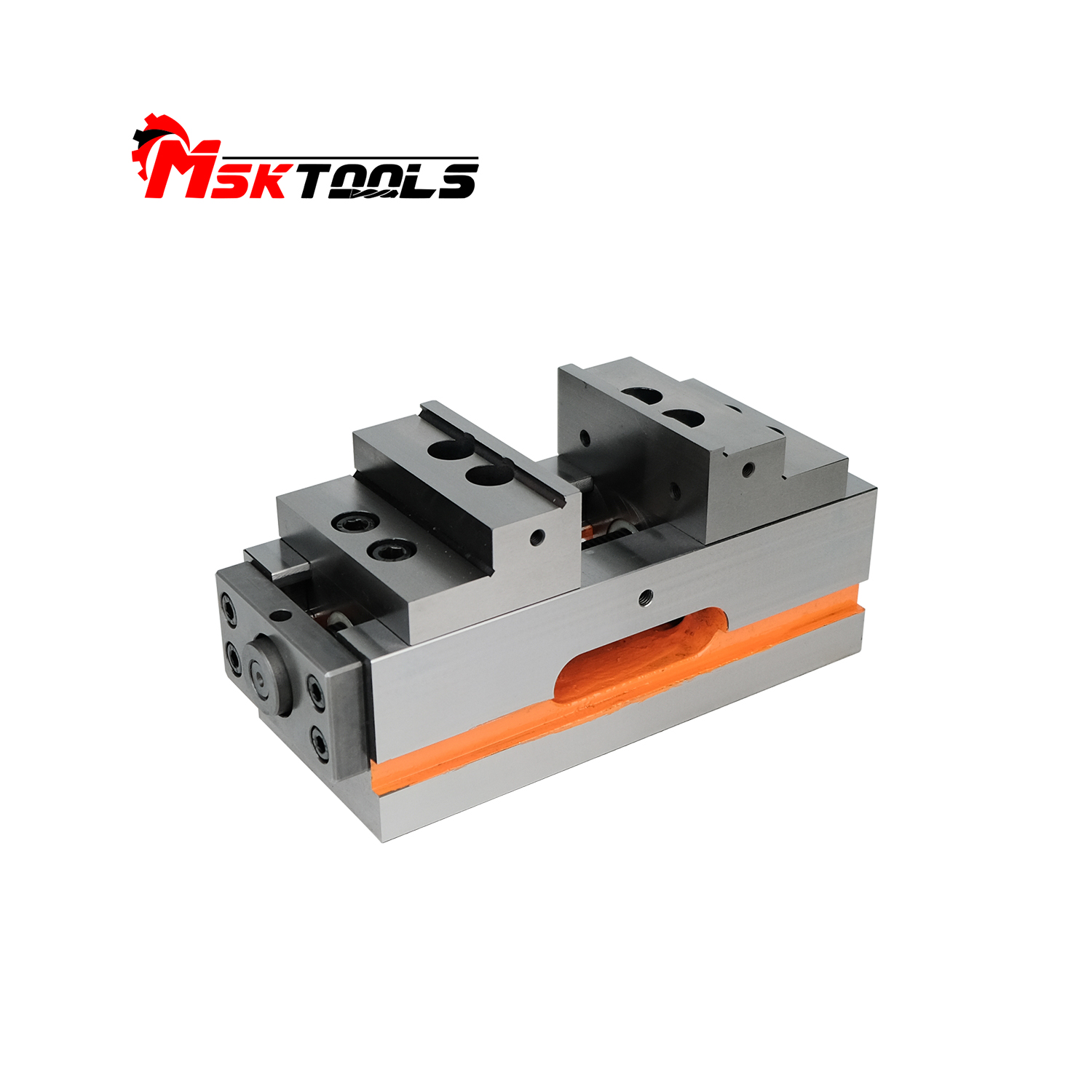
Taking the latest model developed in the industry as an example, it uses a high-precision trapezoidal lead screw and left/right helical thread technology to drive both jaws to move in opposite directions simultaneously through a single lead screw, achieving strictly synchronous displacement. The jaw guide surfaces are precision-ground and fitted with wear-resistant copper bushings to ensure smooth movement and controllable clearance during long-term use. The bidirectional clamping force can reach over 25kN, with completely consistent clamping force on both sides, providing a balanced and stable process benchmark for precision machining.
In the context of the widespread adoption of intelligent manufacturing and flexible manufacturing units, equipment changeover efficiency has become a key factor restricting production line flexibility. The synchronous centering vise, with its constant centering characteristic, significantly simplifies the changeover and setup process. Operators only need to adjust the jaw opening according to the workpiece width, eliminating the need for repeated dial indicator calibration. The changeover time is reduced to 1-2 minutes, improving efficiency by over 70% compared to traditional methods.
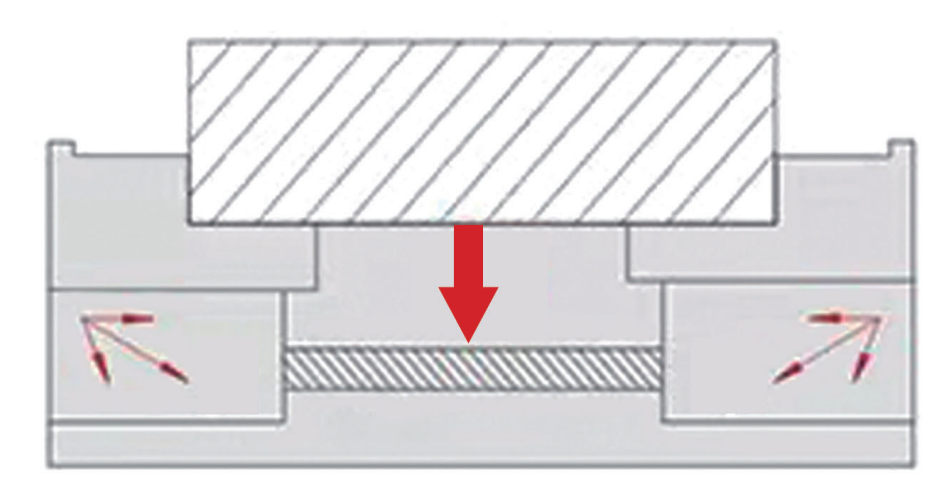
Technological innovation in the synchronous centering vise will advance along two lines: intelligent sensing and modular design. At the intelligent level, the integration of built-in force sensors, displacement sensors, and RFID identification technology enables the vise to sense the clamping status in real time and automatically match process parameters, providing data support for adaptive machining and predictive maintenance. At the modular level, the quick-change jaw system and multi-station base design allow the same vise to be quickly adapted to workpieces of different shapes and sizes, significantly improving equipment utilization and production line flexibility.
Post time: Mar-11-2026


