In the heart of every manufacturing workshop, construction site, and metalworking garage, lies a universal truth: a dull drill bit brings productivity to a grinding halt. The traditional solution—discarding and replacing expensive bits—is a continuous drain on resources. However, a technological revolution is quietly underway, led by advanced grinding machines like the DRM-13 drill bit sharpener machine. This article explores the engineering marvels that make this re-sharpening machine an indispensable tool for professionals.
The core challenge of drill sharpening lies in achieving geometric perfection consistently. A hand-sharpened bit might seem serviceable but often suffers from inaccurate point angles, uneven cutting lips, and an improperly relieved chisel edge. This leads to wandering drill points, excessive heat generation, reduced hole quality, and premature failure. The DRM-13 is engineered to eliminate these variables entirely.
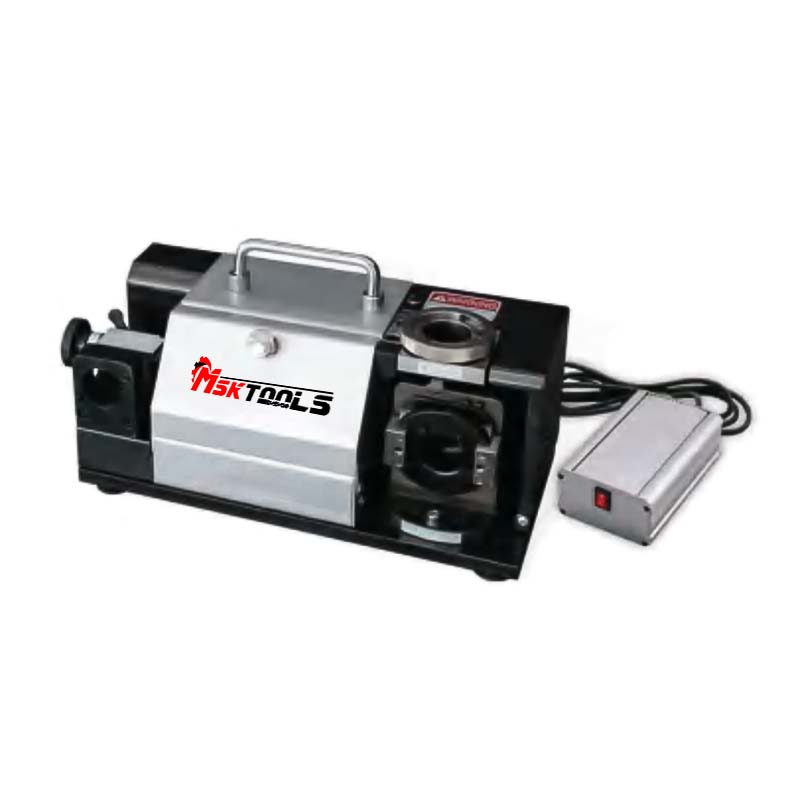
At the forefront of its design is its versatility in material handling. The machine is specifically designed for re-sharpening tungsten carbide, one of the hardest materials used in cutting tools, as well as standard high-speed steel (HSS) drills. This dual capability is significant. Tungsten carbide bits are exceptionally expensive, and the ability to restore them to their original performance standards offers a staggering return on investment. The machine employs a high-grade abrasive wheel with the appropriate grit and hardness to grind carbide effectively without causing micro-fractures, while also being perfectly suitable for HSS.
The precision of the DRM-13 is demonstrated in its three fundamental grinding operations. Firstly, it expertly grinds the rear inclined angle, or the clearance angle behind the cutting lip. This angle is critical; too little clearance causes the heel of the lip to rub against the workpiece, generating heat and friction. Too much clearance weakens the cutting edge, leading to chipping. The machine's adjustable clamping system ensures this angle is replicated with microscopic accuracy every time.
Secondly, it perfectly sharpens the cutting edge itself. The machine's guided mechanism ensures both cutting lips are ground to exactly the same length and at exactly the same angle to the drill's axis. This balance is non-negotiable for a drill to cut true and produce a hole to the correct size. An unbalanced drill will produce an oversized hole and cause undue stress on the drilling equipment.
Finally, the DRM-13 addresses the often-overlooked chisel edge. This is the center of the drill point where the two lips meet. A standard grind produces a wide chisel edge that acts as a negative rake angle, requiring significant thrust force to penetrate the material. The DRM-13 can thin the web (a process often called "web thinning" or "point splitting"), creating a self-centering point that reduces thrust by up to 50% and allows for faster, cleaner penetration.
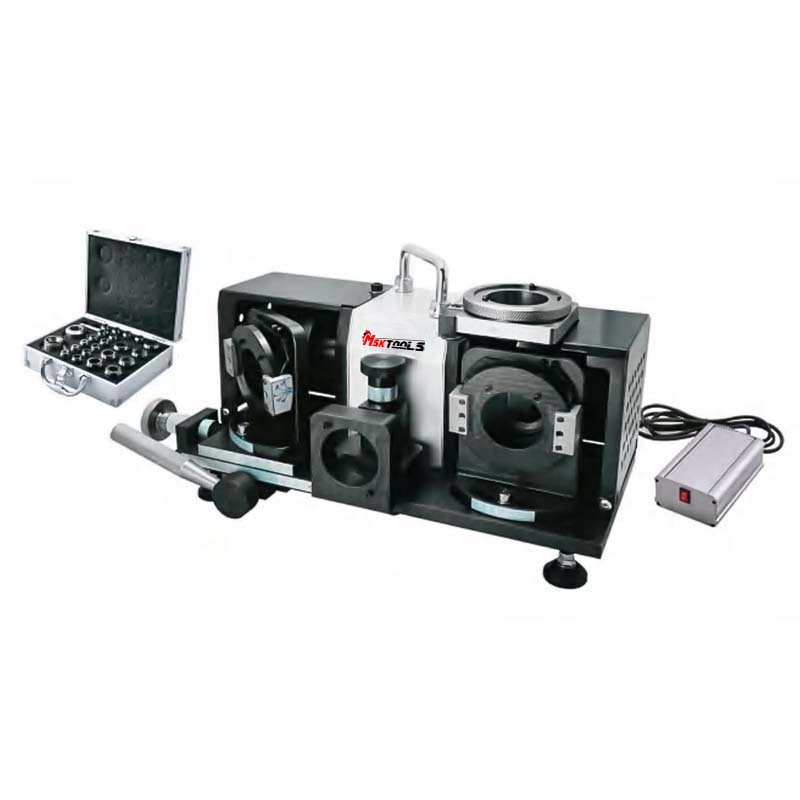
In conclusion, the DRM-13 is far more than a simple sharpening tool. It is a precision instrument that combines material science, mechanical engineering, and user-friendly design to deliver a professional finish on par with—or often superior to—new drill bits. For any operation reliant on drilling, it represents not just a cost-saving device, but a fundamental upgrade in capability and efficiency.
Post time: Aug-11-2025


