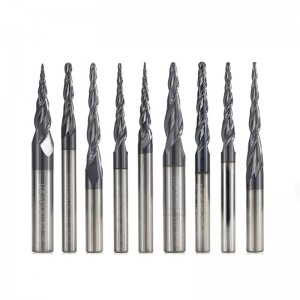
Ball Nose End Mill for Steel – 3D Contouring, Radius Blending and Finishing




Ball end mills are cutting tools with ball-shaped cutting edges that are mounted on milling machines for milling various curved surfaces and circular grooves. Also called R-cutters, ball end mills are particularly suitable for cutting curved surfaces or three-dimensional shapes and are commonly used for finishing curved surfaces. They are widely used in fields such as body panel molds, aerospace, shipbuilding, and turbine machinery manufacturing.
Where a ball nose cutter works best
3D contouring
Curved surface milling
Radius blending
Mold and die finishing
Engraving and light finishing
Complex steel parts with changing angles
Semi-finishing to finishing operations
A ball nose end mill is not the first choice for sharp square shoulders or flat-bottom slots. Use a square end mill for those features.
Design and machining notes
Full-radius cutting tip for smooth surface transitions.
Solid carbide body for steel, P20, steel plate and steel sheet.
Coated carbide options for improved wear resistance.
Right-hand cutting as standard; left-hand tools available on request.
Standard flute diameters from 4 mm to 12 mm.
Custom ball radius, neck length and coating can be quoted.


Ball nose end mill specifications
| Flute Diameter (mm) | Flute Length (mm) | Shank Diameter (mm) | Total Length (mm) |
| 4 | 12 | 4 | 50 |
| 6 | 18 | 6 | 50 |
| 6 | 18 | 6 | 60 |
| 8 | 24 | 8 | 60 |
| 8 | 24 | 8 | 75 |
| 10 | 30 | 10 | 75 |
| 10 | 30 | 10 | 100 |
| 12 | 36 | 12 | 75 |
Ball nose end mill reference test data
Reference tool: D6×15×50L
Spindle speed: 5,500 rpm
Feed rate: 2,000 mm/min
Workpiece: P20, approx. HRC32
Cutting depth: 0.5 mm
Machining method: bottom and side edges cutting together
Machining time: 7 hours
For ball nose milling, the same steel grade can behave differently because step-over and surface finish targets matter more. Use this data as a starting point, then adjust step-over, feed and spindle speed for your 3D contouring job.


Custom ball nose end mills for steel
If you need a specific ball radius, flute length, shank, neck relief or coating, send us the drawing or sample. MSK can produce custom ball nose end mills for steel and quote according to quantity and application.
About Us

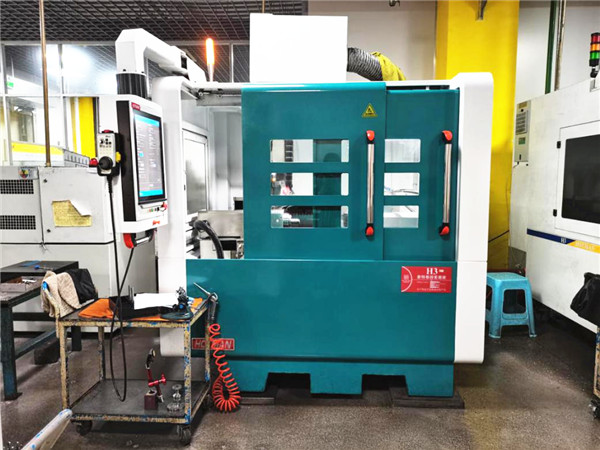
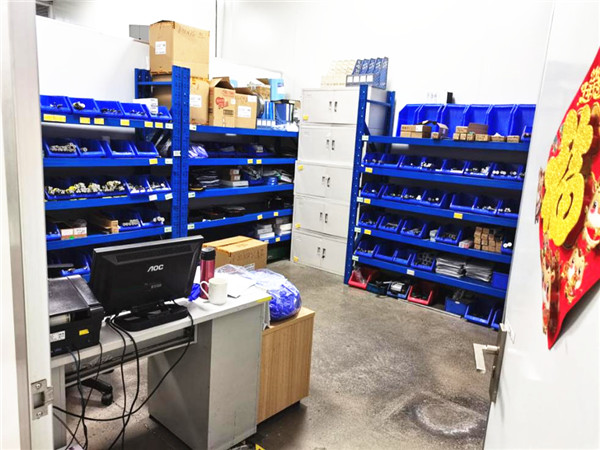
MSK is a Tianjin-based cutting tool partner for workshops, manufacturers and maintenance teams. Since 2015, the company has focused on practical CNC tooling and one-stop supply. Rheinland ISO 9001 certification came in 2016. Production and testing rely on advanced equipment such as the German SACCKE high-end five-axis grinding center, German ZOLLER six-axis tool testing center and Taiwan PALMARY machine tool.
If you need a ball nose profile, coating or neck design that is not in our standard list, send the drawing and quantity. Our staff will help match the tool to your material, machine and finishing target. MSK also supplies taps, drills, blades, collets, tool holders, dies, machine tools and other tooling products.

FAQ
It is used for 3D contouring, curved surfaces, radius blending and finishing. It leaves a rounded profile instead of a sharp corner.
It can remove material, but it will not produce a sharp flat-bottom slot like a square end mill. For flat slots and square shoulders, use a square end mill.
Step-over is the side distance between two passes. A smaller step-over usually gives a smoother surface but takes more time. A larger step-over is faster but may leave visible scallops.
Yes. In our reference test, a D6×15×50L carbide tool ran on P20 at approximately HRC32 with a 0.5 mm cutting depth for 7 hours.
Standard flute diameters include 4 mm, 6 mm, 8 mm, 10 mm and 12 mm. Custom ball radii and lengths can be quoted.
Yes. Send the radius, dimensions, coating, quantity and workpiece material. MSK will recommend a suitable tool and provide a quote.